£74.95
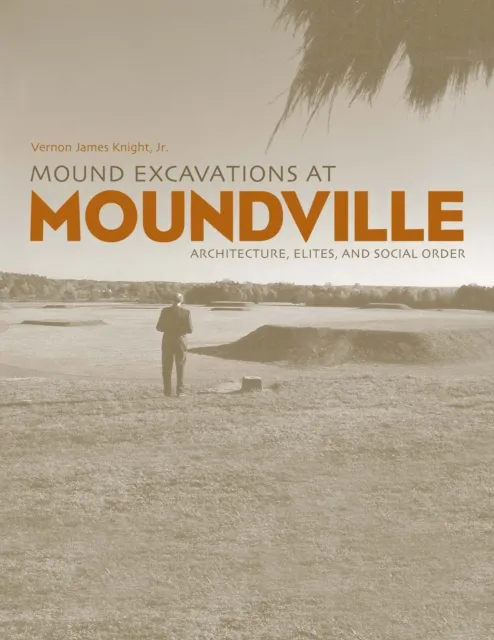
Mound Excavations at Moundville
Architecture, Elites and Social Order

How social and political power was wielded in order to build Moundville
This work is a state-of-the-art, data-rich study of excavations undertaken at the Moundville site in west central Alabama, one of the largest and most complex of the mound sites of pre-contact North America. Despite the site''s importance and sustained attention by researchers, until now it has lacked a comprehensive analysis of its modern excavations. Richly documented by maps, artifact photo-graphs, profiles of strata, and inventories of materials found, the present work explores one expression of social complexity; the significance of Moundville’s monumental architecture, including its earthen mounds; the pole-frame architecture that once occupied the summits of these mounds; and the associated middens that reveal the culture of Moundville’s elites.
Survey of Excavations
This book supplies a survey of important materials recovered in more than a decade of recent excavations of seven mounds and related areas under the author’s direction, as part of a long-term archaeological project consisting of new field work at the Mississippian political and ceremonial center of Moundville.
Impressions of Moundville
Visitors to Moundville are immediately impressed with its monumentality. The expansiveness and grandness of that landscape are, of course, deliberate features that have a story to tell and this archaeological project reveals Moundville’s monumentality and its significance to the people whose capital town it was.
Distribution of Social and Political Power
Exactly how the social and political power symbolized by mound building was distributed is a question central to this work. It seems critical to ask to what extent this monumental landscape was the product of a chief’s ability to recruit and direct the labor of large groups of political subordinates, most of whom were presumably non-kin. At the onset of the present project, speculations regarding the paired orders of mounds and the timing of the formal structuring of space at Moundville were already suggested but were in need of further testing, confirmation, and refinement. The work reported in this volume is largely devoted to filling in such evidence and refining those initial insights. An excellent chapter by H. Edwin Jackson and Susan L. Scott, "Zooarchaeology of Mounds Q, G, E, F, and R", compliments this research.