£104.00
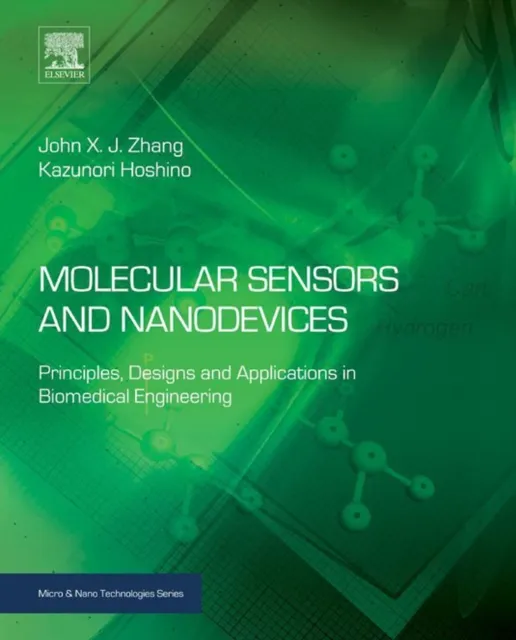
Molecular Sensors and Nanodevices
Principles, Designs and Applications in Biomedical Engineering

Applications and Technologies
With applications ranging from medical diagnostics to environmental monitoring, molecular sensors (also known as biosensors, chemical sensors, or chemosensors), along with emerging nanotechnologies offer not only valuable tools but also unlimited possibilities for engineers and scientists to explore the world.
New generation of functional microsystems can be designed to provide a variety of small scale sensing, imaging and manipulation techniques to the fundamental building blocks of materials.
Coverage and Principles
This book provides comprehensive coverage of the current and emerging technologies of molecular sensing, explaining the principles of molecular sensor design and assessing the sensor types currently available.
Having explained the basic sensor structures and sensing principles, the authors proceed to explain the role of nano/micro fabrication techniques in molecular sensors, including MEMS, BioMEMS, MicroTAS among others.
Design Paradigms and Applications
The miniaturization of versatile molecular sensors opens up a new design paradigm and a range of novel biotechnologies, which is illustrated through case studies of groundbreaking applications in the life sciences and elsewhere.
As well as the techniques and devices themselves, the authors also cover the critical issues of implantability, biocompatibility and the regulatory framework.
Target Audience and Educational Resources
The book is aimed at a broad audience of engineering professionals, life scientists and students working in the multidisciplinary area of biomedical engineering. It explains essential principles of electrical, chemical, optical and mechanical engineering as well as biomedical science, intended for readers with a variety of scientific backgrounds.
In addition, it will be valuable for medical professionals and researchers. An online tutorial developed by the authors provides learning reinforcement for students and professionals alike.
Features and Content Highlights
Reviews of state-of-the-art molecular sensors and nanotechnologies
Explains principles of sensors and fundamental theories with homework problems at the end of each chapter to facilitate learning
Demystifies the vertical integration from nanomaterials to devices design
Covers practical applications and recent progress in state-of-the-art sensor technologies
Includes case studies of important commercial products
Covers the critical issues of implantability, biocompatibility and the regulatory framework