£119.50
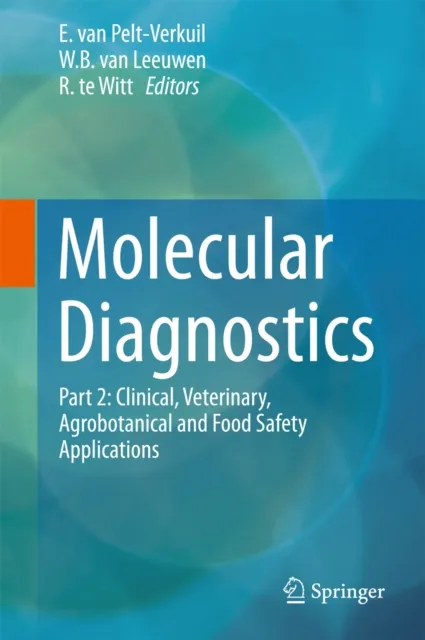
Molecular Diagnostics
Part 1: Technical Backgrounds and Quality Aspects

The books Molecular Diagnostics Part 1 and 2 provide a comprehensive and practical overview of the state-of-the-art molecular biological diagnostic strategies that are being used in a wide variety of disciplines.
The editors and experts in their respective fields have combined their knowledge to write these two books. Many years of experience in the development, application and quality control of molecular diagnostic methods is reflected herewith.
Molecular Diagnostics Part 1 is dedicated to the theoretical backgrounds of the technologies often applied in molecular diagnostics, in which nucleic acid amplification methods (such as real-time PCR), sequencing and bioinformatics are the basic tools. The assay design and -development, combined with items of trouble-shooting are described in detail. As a foundation of reliable molecular diagnostic assays, the quality control required for validation, implementation and performance of molecular diagnostic assays is thoroughly discussed. This book also provides extensive information for those working with molecular techniques in a wide variety of research applications using conventional and real-time PCR technology, Sanger and high throughput sequencing techniques, and bioinformatics.
Molecular Diagnostics Part 2 highlights the applications of the molecular diagnostic methods in the various diagnostic laboratories, comprising:
Clinical microbiology
Clinical chemistry
Clinical genetics
Clinical pathology
Molecular hematopathology
Veterinary health
Plant health
Food safety
Both full-colour and well-illustrated books are particularly valuable for students, clinicians, scientists and other professionals who are interested in (designing) molecular diagnostic methods and for those who wish to broaden their knowledge on the current molecular biological revolution. The information in the books highlights the trend of the integration of multiple (clinical) disciplines into one universal molecular laboratory.