£129.99
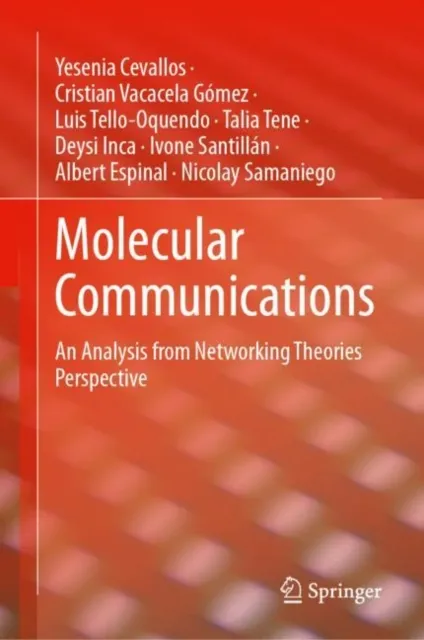
Molecular Communications
An Analysis from Networking Theories Perspective

Overview
This book provides a complete analysis of molecular communications systems from the paradigm of TCP/IP network stack, and it exploits network theories (e.g. independent functions of a layer into a stack, addressing, flow control, error control, and traffic control) and applies them to biological systems. The authors show how these models can be applied in different areas such as industry, medicine, engineering, biochemistry, biotechnology, computer sciences, and other disciplines.
Benefits and Applications
The authors then explain how it is possible to obtain enormous benefits from these practices when applied in medicine, such as enhancing current treatment of diseases and reducing the side effects of drugs and improving the quality of treatment for patients. They show how molecular communications systems, in contrast to existing telecommunication paradigms, use molecules as information carriers.
How It Works
They show how sender biological nanomachines (bio-nano machines) encode data on molecules (signal molecules) and release the molecules into the environment. They go on to explain how the molecules then travel through the environment to reach the receiver bio-nano machines, where they biochemically react with the molecules to decipher information.
Target Audience
This book is relevant to those studying telecommunications and biomedical students, engineers, masters, PhDs, and researchers.