£40.99
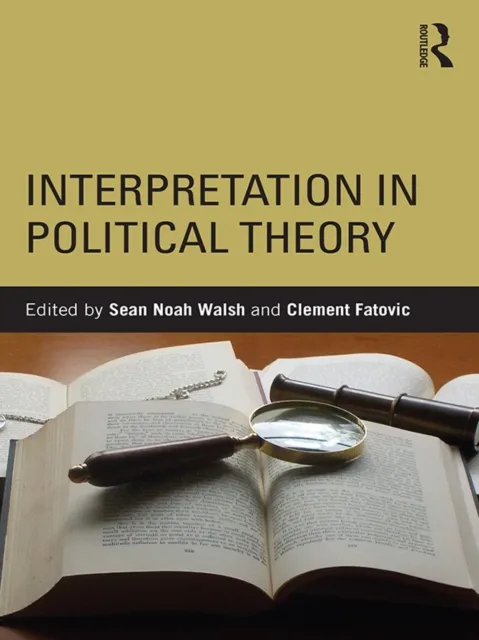
Modeling Interpretation and the Practice of Political Theory

Political theory offers a great variety of interpretive traditions and models.
Today, pluralism is the paradigm. But are all approaches equally useful? What are their limits and possibilities? Can we practice them in isolation, or can we combine them? Modeling Interpretation and the Practice of Political Theory addresses these questions in a refreshing and hands-on manner. It not only models in the abstract, but also tests in practice eight basic schemes of interpretation with which any ambitious reader of political texts should already be familiar. Comprehensive and engaging, the book includes:
A straightforward typology of interpretation in political theory.
Chapters on the analytical Oxford model, biographical and oeuvre-based interpretation, Skinner’s Cambridge School, the esoteric model, reflexive hermeneutics, reception analysis and conceptual history.
Original readings of Federalist Paper No. 10, Plato’s Statesman, de Gouges’s The Three Urns, Rivera’s wall painting The History of Mexico and Strauss’s Persecution and the Art of Writing; with further chapters on Machiavelli, Huang Zongxi and a Hittite loyalty oath.
An Epilogue proposing pragmatist eclecticism as the way forward in interpretation. An inspiring, hands-on textbook suitable for undergraduate and graduate students, as well as experienced scholars of political theory, intellectual history and philosophy interested in learning more about types and models of interpretation, and the challenge of combining them in interpretive practice.