£109.99
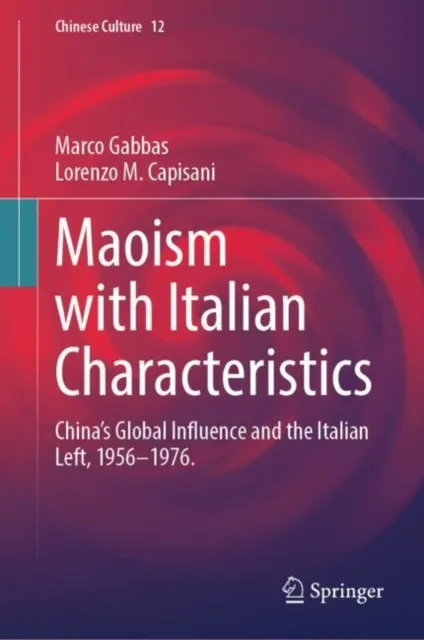
Maoism with Italian Characteristics
China's Global Influence and the Italian Left, 1956-1976

Overview
This book is, primarily, a historical study that investigates why Mao's thought took root in Italy, how it developed, and its emergence in opposition to the Italian Communist Party, with a focus on the years 1956-1976. The book also prompts reflection on how dissent has been perceived in Leftist parties more broadly, and how 'sub-cultures' can become prominent.
Content and Analysis
The authors delve into the relations between Mao's China and the Italian institutional Left, mindful of the fact that not all the involved parties represented monolithic clusters of consent. The book confronts a watershed of reforms or revolution, in which the Italian Communist Party embraced a non-revolutionary and parliamentary policy, and where Italian radicals took Mao's slogans literally to argue that a revolution in Italy was not only possible, but necessary.
Historical Context
Tracking the subsequent abandonment of Maoism in modern left-wing parties in Italy, which gradually became more distant from the working class, the authors juxtapose this to modern China, which opened up with Deng Xiaoping's reforms and Xi Jinping's search for rejuvenation.
Global Perspective
In presenting Italian Maoism—a largely forgotten topic and fascinating example of Western Maoism—to an English-reading audience, the authors contextualize these local historical events in a global modern perspective, linking them to the Cold War and horizontal issues, such as dissent, in a rich comparison of Italian and Chinese sources from party archives and collections.
Relevance
It is relevant to historians interested in the circulation of Chinese political ideas in the West, and China's historical trajectory from the Cold War to the present.