£81.61
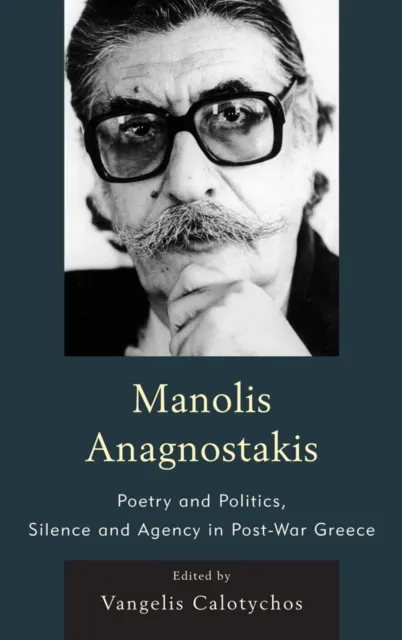
Manolis Anagnostakis
Poetry and Politics, Silence and Agency in Post-War Greece

About the Book
The book reflects on the life and work of a significant poet, public figure, and influential commentator of the cultural, social, and political history of Greece post-World War II: Manolis Anagnostakis (1925–2005). It considers his oeuvre in relation to the work of his peers and to traditions of writing, both Greek and non-Greek, as it challenges the assumptions and determinations of his critics. The volume explores the author’s sustained reflection on what it is poetry does, if anything, and how it goes about this at different historical moments. It does so through the framework of his political and social perspectives as well as against principles of committed action, above all, to leftist ideas and movements. For Anagnostakis is vitally important for thinking about the relation of politics to poetics and the complex, and in some quarters contradictory, relation of leftist politics and the travails of (euro)communism to poetry and literature. This analysis, therefore, coincides with the larger questioning of the role for the Left post-1989.
The volume focuses not only on the poet’s canonical poetry up to 1971, but also on the period of his subsequent, self-imposed “silence” and his other “meta-poetic” writings after that date. Two of Anagnostakis’s previously unavailable late collections and a posthumously published interview with the poet appear here in English translation for the very first time. Coming but a few years after the poet’s death in 2005, this rare book-length study of a single Greek poet (other than Cavafy) features articles by leading critics from the American academy. Like Anagnostakis’s own work, these contributions represent a diverse range of approaches and voices: at turns essayistic, impressionistic, and creative, and, at others, scholarly, punctilious, and critical.