£14.99
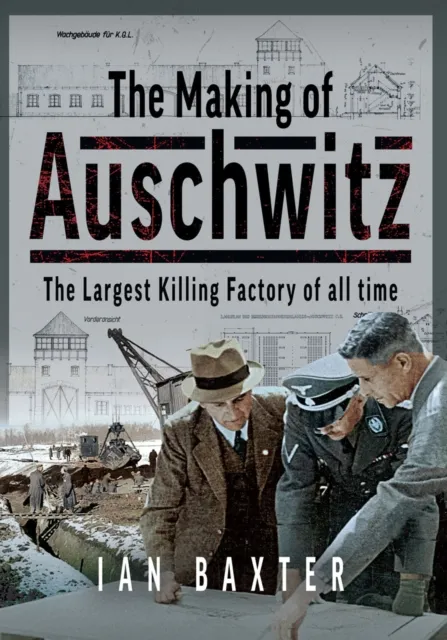
Making of Auschwitz
The Largest Killing Factory of all time

Explores Auschwitz's construction, revealing architectural plans and documents that expose the SS's role in orchestrating genocide.
Commemorating 80 years since the liberation of Auschwitz-Birkenau
This book tells the story of the camp’s construction and its evolution into the largest mass murder factory of all time. Using hundreds of captured German documents and architectural plans, the book is a unique historical source of how the architects came to plan and accomplish the horror we now call Auschwitz.
Documentary Evidence and Architectural Plans
Drawing on key documents from the Building Office archive, this in-depth study uses plans, letters, telegrams, worksite labour reports and minutes of meetings. It reveals how the SS needed civilian knowledge to install electrical, sewage and heating systems, and build chimneys and other structures. It explains how various outside contractors were involved in cooperating in genocide and shows just how eager they were to produce goods for the SS for financial reward.
Construction and Transformation of Birkenau
Just after the construction had begun on Birkenau in 1941, architectural plans were presented to include new crematoria and gas chambers. By the summer of 1943 Birkenau had been transformed into a murder camp but building and planning to further extend the site continued. In November 1944 Himmler gave the order to halt and dismantle the extermination facilities to conceal their murderous activities. When the Red Army arrived on 27 January 1945, most of the camp was still intact. Although the SS had incinerated the camps’ archives they forgot to destroy the construction archive, which was kept in another building. As a result, the Russians found many of the technical drawings including construction blueprints that clearly detailed the extermination facilities.
Historical Significance
With detailed captions and text together with a plethora of rare photographs, the book is an important study into those that masterminded the murder of over 1 million people.