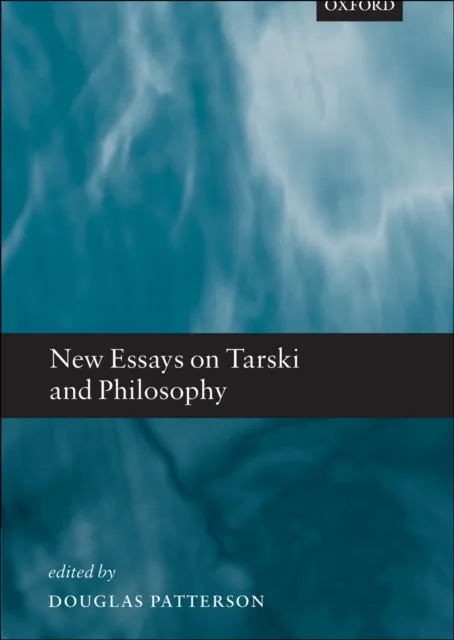
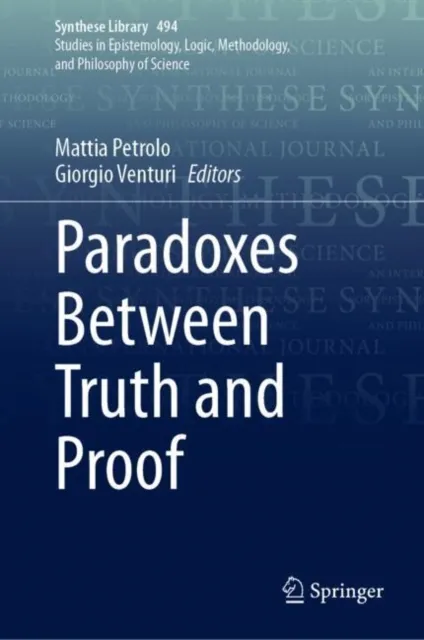
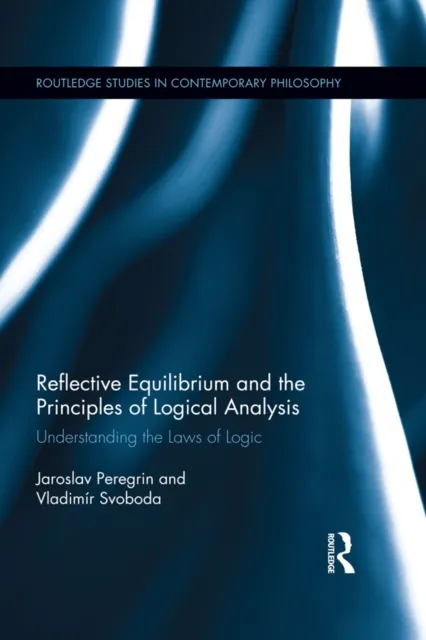
£18.00
Logical Consequence

Understanding Logical Consequence
To understand logic is, first and foremost, to understand logical consequence. This element provides an in-depth, accessible, up-to-date account of and philosophical insight into the semantic, model-theoretic conception of logical consequence, its Tarskian roots, and its ideas, grounding, and challenges.
The topics discussed include:
- (i) the passage from Tarski's definition of truth (simpliciter) to his definition of logical consequence,
- (ii) the need for a non-proof-theoretic definition,
- (iii) the idea of a semantic definition,
- (iv) the adequacy conditions of preservation of truth, formality, and necessity,
- (v) the nature, structure, and totality of models,
- (vi) the logicality problem that threatens the definition of logical consequence (the problem of logical constants),
- (vii) a general solution to the logicality, formality, and necessity problems/challenges, based on the isomorphism-invariance criterion of logicality,
- (viii) philosophical background and justification of the isomorphism-invariance criterion, and
- (ix) major criticisms of the semantic definition and the isomorphism-invariance criterion.