£1.87
Locrine
“Today will die tomorrow.”

Early Life and Education
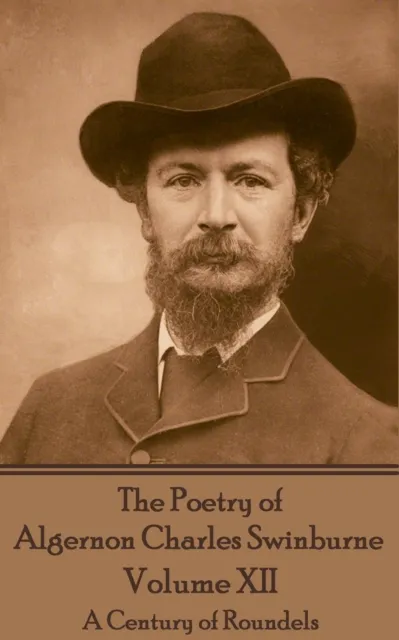
Algernon Charles Swinburne was born on April 5th, 1837, in London, into a wealthy Northumbrian family. He was educated at Eton and at Balliol College, Oxford, but did not complete a degree.
Literary Career and Success
In 1860 Swinburne published two verse dramas but achieved his first literary success in 1865 with Atalanta in Calydon, written in the form of classical Greek tragedy. The following year Poems and Ballads brought him instant notoriety. He was now identified with "indecent" themes and the precept of art for art's sake. Although he produced much after this success, in general his popularity and critical reputation declined.
Qualities of Swinburne's Work
The most important qualities of Swinburne's work are an intense lyricism, his intricately extended and evocative imagery, metrical virtuosity, rich use of assonance and alliteration, and bold, complex rhythms.
Physical Appearance and Personal Life
Swinburne's physical appearance was small, frail, and plagued by several other oddities of physique and temperament. Throughout the 1860s and 1870s he drank excessively and was prone to accidents that often left him bruised, bloody, or unconscious. Until his forties, he suffered intermittent physical collapses that necessitated removal to his parents' home while he recovered.
Literary Criticism and Studies
Throughout his career, Swinburne also published literary criticism of great worth. His deep knowledge of world literatures contributed to a critical style rich in quotation, allusion, and comparison. He is particularly noted for discerning studies of Elizabethan dramatists and of many English and French poets and novelists. As well, he was a noted essayist and wrote two novels.
Later Life and Support
In 1879, Swinburne's friend and literary agent, Theodore Watts-Dunton, intervened during a time when Swinburne was dangerously ill. Watts-Dunton isolated Swinburne at a suburban home in Putney and gradually weaned him from alcohol, former companions, and many other habits as well. Much of his poetry in this period may be inferior, but some individual poems are exceptional; "By the North Sea," "Evening on the Broads," "A Nympholept," "The Lake of Gaube," and "Neap-Tide."
Final Years and Death
Swinburne lived another thirty years with Watts-Dunton. He denied Swinburne's friends access to him, controlled the poet's money, and restricted his activities. It is often quoted that "he saved the man but killed the poet." Swinburne died on April 10th, 1909, at the age of seventy-two.