£41.99
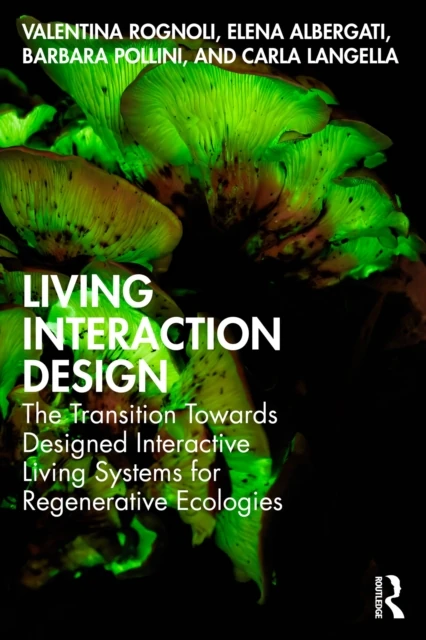
Living Interaction Design
The Transition Towards Designed Interactive Living Systems for Regenerative Ecologies

Bringing together interaction design and the emerging field of biodesign
This book explores the use of living and biofabricated materials in interactive artefacts. As future products become increasingly interactive and complex, careful consideration of their environmental and ethical impacts is more important than ever. While the extraction, production and disposal of materials such as plastics and metals raises serious concerns, biological systems based on living materials offer a more promising path towards regenerative design.
Introduction of Designed Interactive Living Systems (DILS)
The book introduces the concept of Designed Interactive Living Systems (DILS), a new design paradigm in which living materials actively participate in interactions, facilitating a transition from human-centered to multispecies and more-than-human perspectives. It begins with an overview of the life cycle impacts of interactive products, covering critical phases such as raw materials, manufacturing, use, waste and the environmental, health and social impacts of materials.
Case studies and solutions
A wide range of illustrated case studies present solutions to these challenges, showcasing organic electronics, living technologies and living interactive products alongside analyses of existing prototypes and investigations.
Future directions and design maps
Finally, the book offers a series of design maps to guide future DILS developments, covering topics such as designing with microorganisms, human-non-human interaction and the role of biolabs as hybrid spaces for experimentation.
Inspiration and importance of biodesign
Through the presentation of original research and diverse case studies, the book inspires students and designers alike to expand their knowledge and practice. It emphasizes the urgent need to transition from traditional design to biodesign and demonstrates how designers can, and must, take on this role to help shape regenerative, symbiotic futures.