£74.50
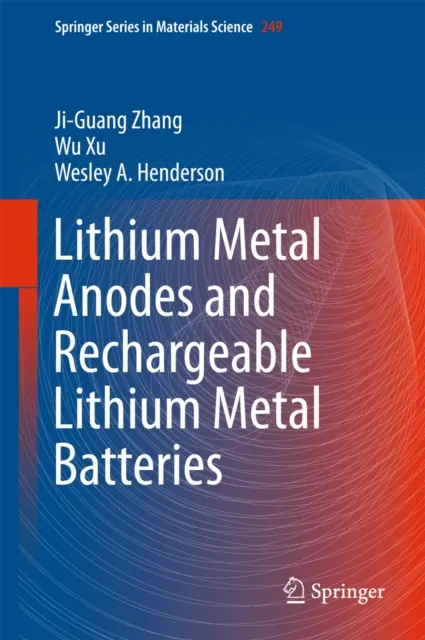
Lithium Metal Anodes and Rechargeable Lithium Metal Batteries

Book Overview
This book provides comprehensive coverage of Lithium (Li) metal anodes for rechargeable batteries. Li is an ideal anode material for rechargeable batteries due to its extremely high theoretical specific capacity (3860 mAh g-1), low density (0.59 g cm-3), and the lowest negative electrochemical potential (−3.040 V vs. standard hydrogenelectrodes). Unfortunately, uncontrollable dendritic Li growth and limited Coulombic efficiency during Li deposition/stripping inherent in these batteries have prevented their practical applications over the past 40 years. With the emergence of post Li-ion batteries, safe and efficient operation of Li metal anodes has become an enabling technology which may determine the fate of several promising candidates for the next generation energy storage systems, including rechargeable Li-air batteries, Li-S batteries, and Li metal batteries which utilize intercalation compounds as cathodes.
Current Research and Developments
In this work, various factors that affect the morphology and Coulombic efficiency of Li anodes are analyzed. The authors also present the technologies utilized to characterize the morphology of Li deposition and the results obtained by modeling of Li dendrite growth. Finally, recent developments, especially the new approaches that enable safe and efficient operation of Li metal anodes at high current densities are reviewed. The urgent need and perspectives in this field are also discussed. The fundamental understanding and approaches presented in this work will be critical for the application of Li metal anodes. The general principles and approaches can also be used in other metal electrodes and general electrochemical deposition of metal films.