£130.95
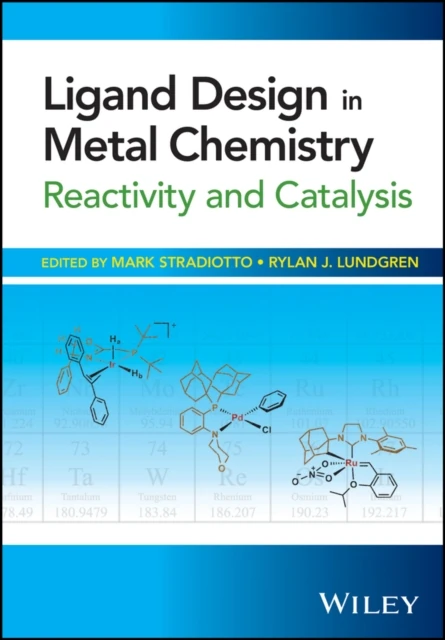
Ligand Design in Metal Chemistry
Reactivity and Catalysis

The design of ancillary ligands used to modify the structural and reactivity properties of metal complexes has evolved into a rapidly expanding sub-discipline in inorganic and organometallic chemistry. Ancillary ligand design has figured directly in the discovery of new bonding motifs and stoichiometric reactivity, as well as in the development of new catalytic protocols that have had widespread positive impact on chemical synthesis on benchtop and industrial scales.
Ligand Design in Metal Chemistry presents a collection of cutting-edge contributions from leaders in the field of ligand design, encompassing a broad spectrum of ancillary ligand classes and reactivity applications. Topics covered include:
Key concepts in ligand design
Redox non-innocent ligands
Ligands for selective alkene metathesis
Ligands in cross-coupling
Ligand design in polymerization
Ligand design in modern lanthanide chemistry
Cooperative metal-ligand reactivity
P,N Ligands for enantioselective hydrogenation
Spiro-cyclic ligands in asymmetric catalysis
This book will be a valuable reference for academic researchers and industry practitioners working in the field of ligand design, as well as those who work in the many areas in which the impact of ancillary ligand design has proven significant, for example synthetic organic chemistry, catalysis, medicinal chemistry, polymer science and materials chemistry.