£99.50
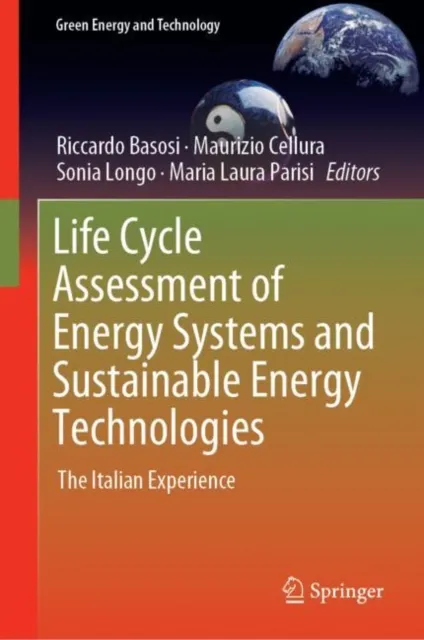
Life Cycle Assessment of Energy Systems and Sustainable Energy Technologies
The Italian Experience

Application of Life Cycle Assessment to Sustainable Energy Systems
This book deals with the application of life cycle assessment (LCA) methodology to sustainable energy systems and technologies. It reviews the state-of-the-art of the Italian experiences on the LCA applied to energy, and the most recent results from research in this field, with a particular focus on renewables, bio-energy and sustainable solutions.
Applications of LCA in Energy Systems
The contributors describe in detail the applications of LCA to various energy system topics, including:
- electricity production, smart energy grids and energy storage systems;
- renewable energy production from biomass;
- production of biodiesel from microalgae;
- environmental impacts of biomass power plants; and
- geothermal energy production.
These topics are supported by critical reviews and case studies, with discussions of Italian examples, demonstrating LCA’s application to various energy systems. A particular focus is placed on bio-energies and bio-energy systems, demonstrating how LCA can be used for optimal bio-energy production.
Target Audience and Benefits
This book offers an opportunity for researchers and advanced practitioners in the field of LCA to learn more about the application of LCA methodology to energy systems and technologies. It will also be of interest to students, as it enables them to understand the environmental impacts of energy systems and sustainable energy technologies, through the analysis of their life cycles.