£28.98
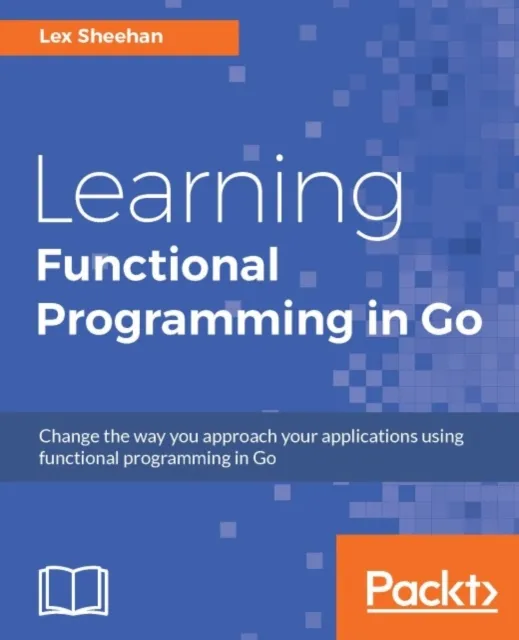
Learning Functional Programming in Go
Function literals, Monads, Lazy evaluation, Currying, and more

Function literals, Monads, Lazy evaluation, Currying, and more
About This Book
Write concise and maintainable code with streams and high-order functions
Understand the benefits of currying your Golang functions
Learn the most effective design patterns for functional programming and learn when to apply each of them
Build distributed MapReduce solutions using Go
Who This Book Is For
This book is for Golang developers comfortable with OOP and interested in learning how to apply the functional paradigm to create robust and testable apps. Prior programming experience with Go would be helpful, but not mandatory.
What You Will Learn
Learn how to compose reliable applications using high-order functions
Explore techniques to eliminate side-effects using FP techniques such as currying
Use first-class functions to implement pure functions
Understand how to implement a lambda expression in Go
Compose a working application using the decorator pattern
Create faster programs using lazy evaluation
Use Go concurrency constructs to compose a functionality pipeline
Understand category theory and what it has to do with FP
In Detail
Lex Sheehan begins slowly, using easy-to-understand illustrations and working Go code to teach core functional programming (FP) principles such as referential transparency, laziness, recursion, currying, and chaining continuations.
This book is a tutorial for programmers looking to learn FP and apply it to write better code. Lex guides readers from basic techniques to advanced topics in a logical, concise, and clear progression.
The book is divided into four modules. The first module explains the functional style of programming: pure functional programming, manipulating collections, and using higher-order functions. In the second module, you will learn design patterns that you can use to build FP-style applications. In the next module, you will learn FP techniques that you can use to improve your API signatures, increase performance, and build better cloud-native applications. The last module covers Category Theory, Functors, Monoids, Monads, Type classes and Generics.
By the end of the book, you will be adept at building applications the FP way.
Style and approach
This book takes a pragmatic approach and shows you techniques to write better functional constructs in Golang. We''ll also show you how use these concepts to build robust and testable apps.