£6.49
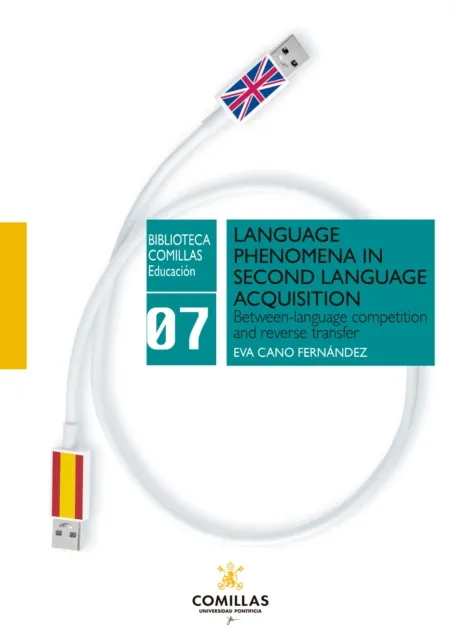
Language phenomena in second language acquisition
Between-language competition and reverse transfer

Bilingualism in a Global Context
Bilingualism is nowadays a global reality. In Spain, over a million and a half Primary School students follow a bilingual curriculum, which has brought about a change of paradigm with regard to the teaching of English as a foreign language. In fact, alongside and as a result of the MEC-British Council bilingual project of 1996, different parallel initiatives have arisen over the years which have consolidated the gradual implementation of bilingual English-Spanish teaching, as well as the teaching of certain academic content in English through the CLIL (Content and Language Integrated Learning) approach.
Focus of the Work
In view of this reality, this work sheds light on the main linguistic phenomena which require our attention in bilingual educational contexts where there is strong between-language competition. Among them, it is worth highlighting the acquisition of foreign languages and second languages, the cognitive and metacognitive processes present in the bilingual brain, multilingualism, interference and reverse transfer, fossilisation and language attrition.
Goals for Educators
All this knowledge will enable bilingual educators to adapt their teaching strategies to achieve a correct use of English and Spanish, as well as to maximise the acquisition of content in both languages, especially in contexts where the L1 and the L2 are used interchangeably.