£18.00
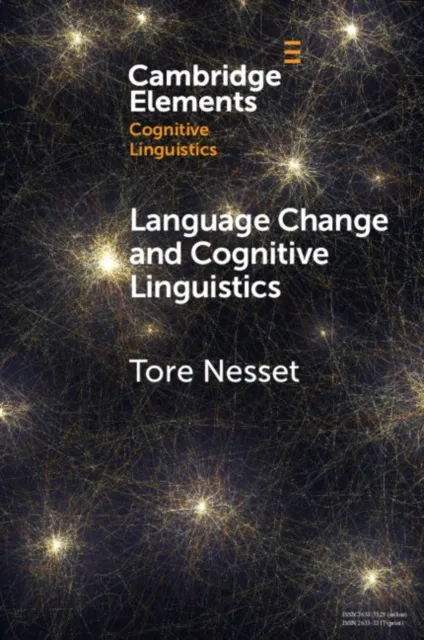
Language Change and Cognitive Linguistics
Case Studies from the History of Russian

Purpose of the Cambridge Element
The purpose of this Cambridge Element is to bring together three subfields of the language sciences: cognitive, historical (diachronic), and Russian linguistics. Although diachrony has inspired a number of important works in recent years, historical linguistics is still underrepresented in cognitive linguistics, and the most influential publications mainly concern the history of English.
Bias in Historical Linguistics
This is an unfortunate bias, especially since its lack of morphological complexity makes English a typologically unusual language.
Focus on Russian Language
In this Cambridge Element, the author demonstrates that Russian has a lot to offer the historically oriented cognitive linguist, given its well-documented history and complex phonology and morpho-syntax.
Case Studies and Key Tenets
Through seven case studies the author illustrates the relevance of four basic tenets of Cognitive Grammar: the cognitive, semiotic, network, and usage-based commitments.