£99.50
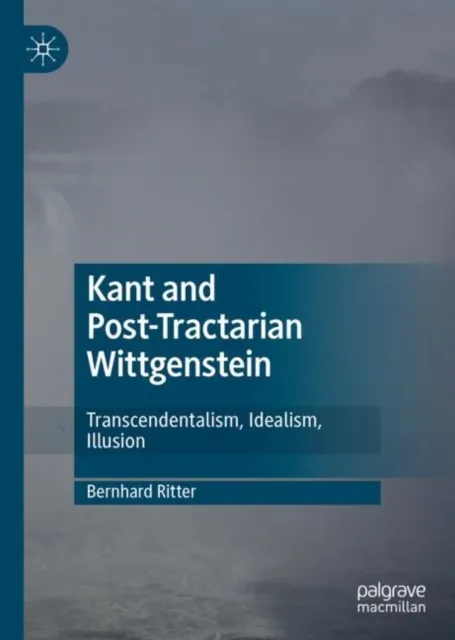
Kant and Post-Tractarian Wittgenstein
Transcendentalism, Idealism, Illusion

Introduction
This book suggests that to know how Wittgenstein’s post-Tractarian philosophy could have developed from the work of Kant is to know how they relate to each other. The development from the latter to the former is invoked heuristically as a means of interpretation, rather than a historical process or direct influence of Kant on Wittgenstein. Ritter provides a detailed treatment of transcendentalism, idealism, and the concept of illusion in Kant’s and Wittgenstein’s criticism of metaphysics. Notably, it is through the conceptions of transcendentalism and idealism that Wittgenstein’s philosophy can be viewed as a transformation of Kantianism. This transformation involves a deflationary conception of transcendental idealism along with the abandonment of both the idea that there can be a priori ''conditions of possibility'' logically detachable from what they condition, and the appeal to an original ‘constitution’ of experience.
Relationship between Kant and Wittgenstein
The closeness of Kant and post-Tractarian Wittgenstein does not exist between their arguments or the views they upheld, but rather in their affiliation against forms of transcendental realism and empirical idealism. Ritter skilfully challenges several dominant views on the relationship of Kant and Wittgenstein, especially concerning the cogency of Wittgenstein-inspired criticism focusing on the role of language in the first Critique, and Kant's alleged commitment to a representationalist conception of empirical intuition.