£30.59
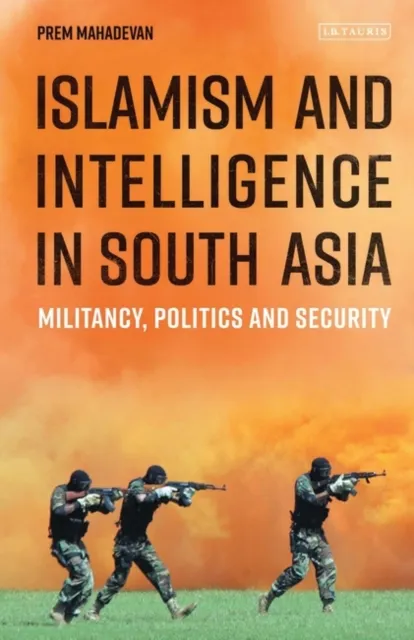
Islamism and Intelligence in South Asia
Militancy, Politics and Security

State sponsorship of terrorism
is a complex and important topic in today's international affairs - and especially pertinent in the regional politics of the Middle East and South Asia, where Pakistan has long been a flashpoint of Islamist politics and terrorism.
In Islamism and Intelligence in South Asia, Prem Mahadevan demonstrates how over several decades, radical Islamists, sometimes with the tacit support of parts of the military establishment, have weakened democratic governance in Pakistan and acquired progressively larger influence over policy-making.
Mahadevan traces this history back to the anti-colonial Deobandi movement, which was born out of the post-partition political atmosphere and a rediscovery of the thinking of Ibn Taymiyyah, and partially ennobled the idea of jihad in South Asia as a righteous war against foreign oppression.
Using Pakistani media and academic sources for the bulk of its raw data, and reinforcing this with scholarly analysis from Western commentators, the book tracks Pakistan's trajectory towards a soft Islamic revolution.
Envisioned by the country's intelligence community as a solution to chronic governance failures, these narratives called for a re-orientation away from South Asia and towards the Middle East.
In the process, Pakistan has become a sanctuary for Arab jihadist groups, such as Al-Qaeda, who had no previous ethnic or linguistic connection with South Asia.
Most alarmingly, official discourse on terrorism has been partly silenced by the military-intelligence complex. The result is a slow drift towards extremism and possible legitimation of internationally proscribed terrorist organizations in Pakistan's electoral politics.