£12.99
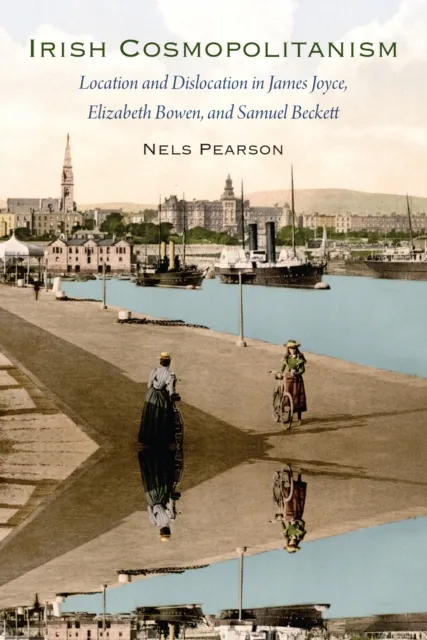
Irish Cosmopolitanism
Location and Dislocation in James Joyce, Elizabeth Bowen, and Samuel Beckett

Donald J. Murphy Prize for a Distinguished First Book
Pearson is convincing in arguing that Irish writers often straddle the space between national identity and a sense of belonging to a larger, more cosmopolitan environment. --Choice
On Comparative Readings
Demonstrat[es]. . .just what it is that makes comparative readings of history, politics, literature, theory, and culture indispensable to the work that defines what is best and most relevant about scholarship in the humanities today. --Modern Fiction Studies
Repositioning the Artistic Subject
[An] admirable book . . . Repositions the artistic subject as something different from the biographical Joyce, Bowen, or Beckett, cohering as a series of particular aesthetic responses to the dilemma of belonging in an Irish context. --James Joyce Broadsheet
Irish Expatriate Modernism
A smart and compelling approach to Irish expatriate modernism. . . . An important new book that will have a lasting impact on postcolonial Irish studies. --Breac
Writing Quality and Impact
Clearly written, convincingly argued, and transformative. --Nicholas Allen, author of Modernism, Ireland and Civil War
Cosmopolitics of Irish Transnationalism
Goes beyond ''statism'' and postnationalism toward a cosmopolitics of Irish transnationalism in which national belonging and national identity are permanently in transition. --Gregory Castle, author of The Literary Theory Handbook
Cosmopolitan Thinking in Irish Literature
Shows how three important Irish writers crafted forms of cosmopolitan thinking that spring from, and illuminate, the painful realities of colonialism and anti-colonial struggle. --Marjorie Howes, author of Colonial Crossings: Figures in Irish Literary History
National and Global Frames
Asserting the simultaneity of national and global frames of reference, this illuminating book is a fascinating and timely contribution to Irish Modernist Studies. --Geraldine Higgins, author of Heroic Revivals from Carlyle to Yeats
Challenging Critical Trends
Looking at the writing of three significant Irish expatriates, Nels Pearson challenges conventional critical trends that view their work as either affirming Irish anti-colonial sentiment or embracing international identity. In reality, he argues, these writers constantly work back and forth between a sense of national belonging that remains incomplete and ideas of human universality tied to their new global environments. For these and many other Irish writers, national and international concerns do not conflict, but overlap--and the interplay between them motivates Irish modernism.
Authors and Their Works
According to Pearson, Joyce's Ulysses strives to articulate the interdependence of an Irish identity and a universal perspective; Bowen's exiled, unrooted characters are never firmly rooted in the first place; and in Beckett, the unsettled origin is felt most keenly when it is abandoned for exile. These writers demonstrate the displacement felt by many Irish citizens in an ever-changing homeland unsteadied by long and turbulent decolonization. Searching for a sense of place between national and global abstractions, their work displays a twofold struggle to pinpoint national identity while adapting to a fluid cosmopolitan world.