£60.99
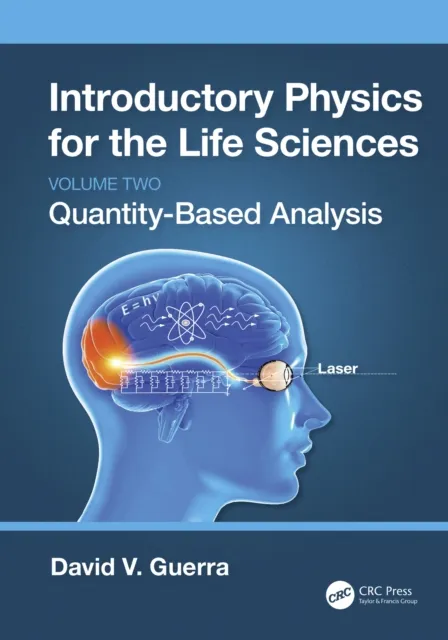
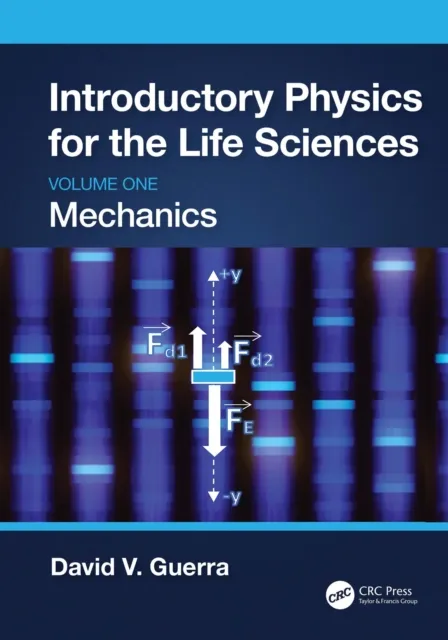
Introductory Physics for the Life Sciences: Mechanics (Volume One)

Introduction
This textbook provides an accessible introduction to physics for undergraduate students in the life sciences, including those majoring in all branches of biology, biochemistry, and psychology and students working on pre-professional programs such as pre-medical, pre-dental, and physical therapy. The text is geared for the algebra-based physics course, often named College Physics in the United States.
Course Focus
The order of topics studied are such that most of the problems in the text can be solved with the methods of Statics or Dynamics. That is, they require a free body diagram, the application of Newton’s Laws, and any necessary kinematics. Constructing the text with a standardized problem-solving methodology, simplifies this aspect of the course and allows students to focus on the application of physics to the study of biological systems. Along the way, students apply these techniques to find the tension in a tendon, the sedimentation rate of red blood cells in haemoglobin, the torques and forces on a bacterium employing a flagellum to propel itself through a viscous fluid, and the terminal velocity of a protein moving in a Gel Electrophoresis device.
Part Two
This is part one of a two-volume set; volume 2 introduces students to the conserved-quantities and applies these problem-solving techniques to topics in Thermodynamics, Electrical Circuits, Optics, and Atomic and Nuclear Physics always with continued focus on biological applications.
Key Features
Key Features:
- Organised and centred around analysis techniques, not traditional Mechanics and E&M.
- Presents a unified approach, in a different order, meaning that the same laboratories, equipment, and demonstrations can be used when teaching the course.
- Demonstrates to students that the analysis and concepts they are learning are critical to the understanding of biological systems.