£34.95
Interruptions
The Fragmentary Aesthetic in Modern Literature

Overview
A history of fragmentary—or interrupted—writing in avant-garde poetry and prose by a renowned literary critic.
Introduction to the Book
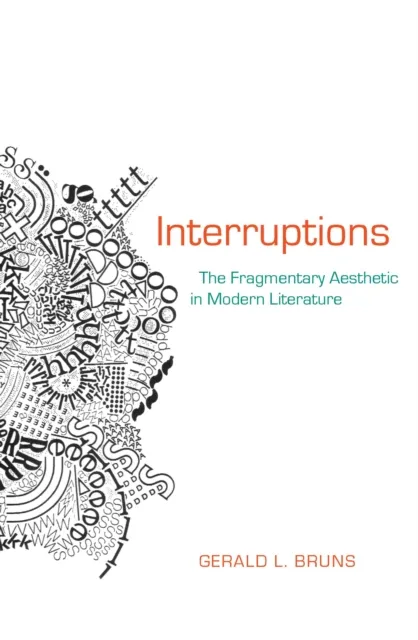
In Interruptions: The Fragmentary Aesthetic in Modern Literature, Gerald L. Bruns explores the effects of parataxis, or fragmentary writing as a device in modern literature. Bruns focuses on texts that refuse to follow the traditional logic of sequential narrative. He explores numerous examples of self-interrupting composition, starting with Friedrich Schlegel's inaugural theory and practice of the fragment as an assertion of the autonomy of words, and their freedom from rule-governed hierarchies.
Historical Context
Bruns opens the book with a short history of the fragment as a distinctive feature of literary modernism in works from Gertrude Stein to Paul Celan to present-day authors. The study progresses to the later work of Maurice Blanchot and Samuel Beckett, and argues, controversially, that Blanchot's writings on the fragment during the 1950s and early 1960s helped to inspire Beckett’s turn toward paratactic prose.
Poetry and Contemporary Works
The study also extends to works of poetry, examining the radically paratactic arrangements of two contemporary British poets, J. H. Prynne and John Wilkinson, focusing chiefly on their most recent, and arguably most abstruse, works. Bruns also offers a close study of the poetry and poetics of Charles Bernstein.
James Joyce and Literary Analysis
Interruptions concludes with two chapters about James Joyce. First, Bruns tackles the language of Finnegans Wake, namely the break-up of words themselves, its reassembly into puns, neologisms, nonsense, and even random strings of letters. Second, Bruns highlights the experience of mirrors in Joyce’s fiction, particularly in Dubliners, Portrait of the Artist as a Young Man, and Ulysses, where mirrored reflections invariably serve as interruptions, discontinuities, or metaphorical displacements and proliferations of self-identity.