£45.99
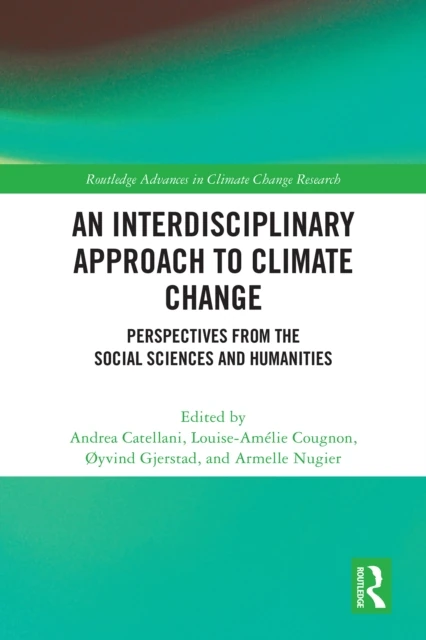
Interdisciplinary Approach to Climate Change
Perspectives from the Social Sciences and Humanities

Overview
This book offers a comprehensive overview of the ways in which research and perspectives from the social sciences and humanities can be combined for a more effective understanding of climate change and its impacts. Climate change affects all aspects of life, influencing personal lifestyle choices and political perceptions. Beyond legal and political measures, the engagement of individuals and local communities has become essential for necessary systemic change. Understanding the complex human and social dynamics is key to achieving real change, in favour of a resilient and low-carbon future.
Contributions and Approaches
This book highlights the theoretical and practical contributions of the social sciences and humanities in understanding how humans perceive and respond to climate change, and the ways in which they can be combined to fight climate disruption and its effects. These interdisciplinary approaches draw upon fields such as communication sciences, linguistics, psychology, anthropology, educational sciences, management studies, and philosophy, to explore the nexus between climate change and human and social dynamics in individual, collective, and political actions.
Case Studies and Collaboration
Drawing on a wide range of interesting case studies, the book highlights opportunities for collaboration between disciplines by combining methodological and theoretical components and synthesizing the research results. Ultimately, the book demonstrates that a more effective collaboration between the social sciences and humanities is required to fully understand the complexities of our relationship with climate change, and to pave the way to a real ecological transition.
Intended Audience
The book will be of use to scholars, students, researchers, and practitioners interested in communication studies, psychology, linguistics, sociology, philosophy, management, educational studies, transition studies, and connected fields.