£83.00
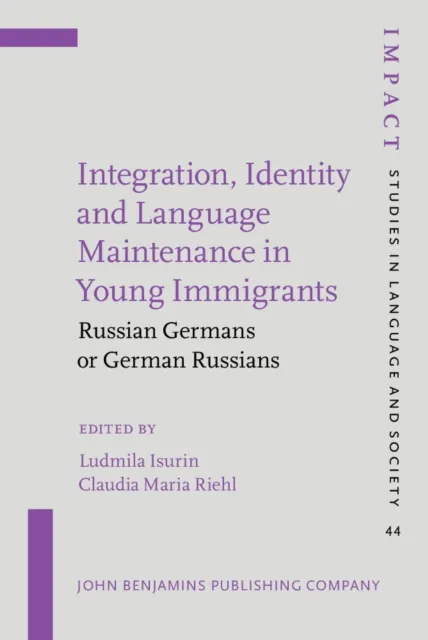
Integration, Identity and Language Maintenance in Young Immigrants
Russian Germans or German Russians

Introduction
The volume presents a selection of contributions related to integration, adaptation, language attitudes and language change among young Russian-speaking immigrants in Germany.
Historical Context
At the turn of the century, Germany, which defined itself as a mono-ethnic and mono-racial society, has become a country integrating various immigrant groups.
Immigrant Groups
Among those, there are three different types of Russian immigrants: Russian Germans, Russian Jews and ethnic Russians, all three often perceived as "e;Russians"e; by the host country.
Ethnic and Linguistic Background
The three groups have the same linguistic background, but a different ethnicity, known as "e;nationality"e;, a separate entry in Russian official documents.
Impact on Integration
This defined the immigration paths and the subsequent integration into German society, where each group strives to position itself in relation to two other groups in the same migrant space.
Discussion Topics
The book discusses the complexities of belonging and (self-/other) assignment to groups as well as the attitude to language maintenance among young Russian-speaking immigrants.