£41.99
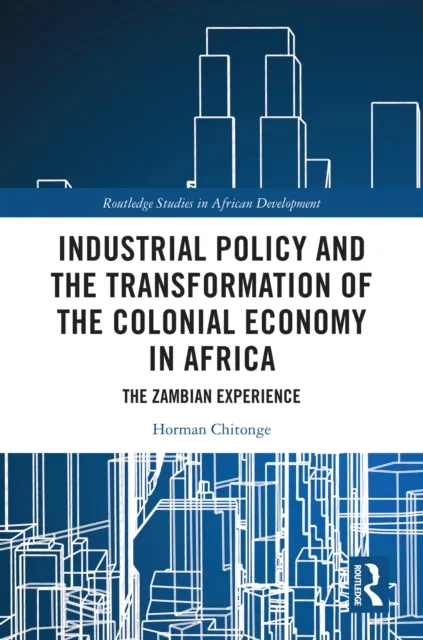
Industrial Policy and the Transformation of the Colonial Economy in Africa
The Zambian Experience

Industrial Policy and the Transformation of the Colonial Economy in Africa
Industrial Policy and the Transformation of the Colonial Economy in Africa offers an in-depth analysis of the role industrial policy can play in the transformation of African economies.
Using examples from Zambia’s industrial development experience, this book illustrates that core features of the colonial economy have not just survived six decades of independence in most African countries, but they have continued to shape the nature, scope and pace of economic activities on the continent. The book argues that since the colonial economy in Africa was not intended to serve the interests of Africans, it is imperative that the structures and the underlying rationale of the colonial economy are radically reoriented if economic activities in Africa are to benefit the majority of Africans.
Drawing from the Zambian experience, the book shows that the transformation of the colonial economy in Africa is urgently needed. Whilst this has proved to be difficult over the past six decades, it can be done. The book outlines a specific type of industrial policy, Frontier Industrial Policy, as a key instrument for transforming the structure of African economies.
At a time when economic growth across Africa is under considerable pressure due to COVID-19, the insights in this book will be of interest to researchers across Economics, Development, Postcolonial Studies, and African Studies.