£85.99
Individual and Social Adaptions to Human Vulnerability

Introduction
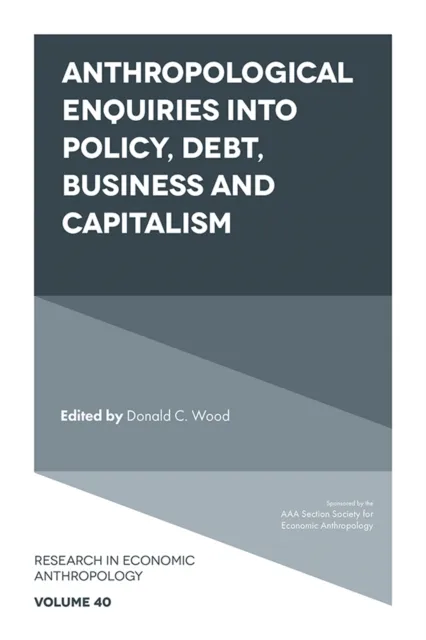
This volume of Research in Economic Anthropology, which presents ten peer-reviewed anthropological papers, celebrates the 40th anniversary of the series by taking a close look at human vulnerability: the ways in which people attempt to cope with it and barriers to successfully overcoming it.
Microfinance and Vulnerability
The two leading articles both take up the issue of microfinance; Daniel Murphy examines the influences of this in the lives of pastoralists in Mongolia, and Megan Hinrichsen explores related processes among vendors in Quito, Ecuador. Next, Elena Sischarenco looks at ways of dealing with vulnerability in the northern Italian construction industry. Sarah Lyon investigates smallholders’ experiences with, and adaptations to, the coffee rust disaster in Oaxaca, Mexico, as well as the functions of fair trade organizations. Rounding out the first half of the volume is Raja Swamy’s analysis of post-tsunami reconstruction in Tamil Nadu, India.
Strategies and Historical Perspectives
The second half starts with Janneke Verheijen’s investigation of women’s survival strategies in rural Malawi, southeast Africa, and Lai Wo’s study of intimate relationships and transactions between Western men and Southeast Asian women in Hong Kong. Courtney Lewis explores political and economic sovereignty among the Eastern Band of Cherokee Indians in North Carolina, USA. Finally, the volume turns to the past with Kari Henquinet’s examination of the evolution of American faith-based overseas development aid projects in the 20th century, and with Serge Svizzero’s and Clement Tisdell’s analysis of Early Bronze Age desert kite use for trapping gazelles in parts of Southwest Asia.
Conclusion
Ultimately, it is hoped that this and other scholarly investigations into human vulnerability will lead to better preventive and curative measures, for an imperfect world.