£129.50
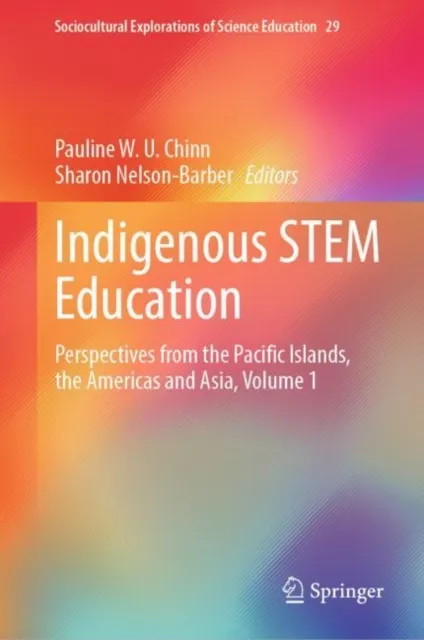
Indigenous STEM Education
Perspectives from the Pacific Islands, the Americas and Asia, Volume 2

Building on Indigenous Theory and Research
This book builds upon the range of Indigenous theory and research found in Volume I and applies these learnings to interventions in schools, communities, teacher education and professional development. It is part of a two-volume set that addresses a growing recognition that interdisciplinary, cross-cultural and cross-hybrid learning is needed to foster scientific and cultural understandings and move STEM learning toward more just and sustainable futures for all learners.
Engaging Through Storytelling and Experiential Learning
Authors working in Eurocentric settings of schools and colleges—whether in the continental or island United States, Canada, Thailand, Taiwan or Chuuk—utilize storytelling, place, language and experiential learning to engage students in meaningful, highly contextualized study that honors ancestral knowledge and practices. They recognize that their disciplines have been structured and colonized by Eurocentric/American frameworks that lack storied, ethical contexts developed through living sustainably in particular places.
Integrating Indigenous and Local Knowledge
Recognizing that students seeking to enter STEM majors and careers now must be knowledgeable in multiple ways, authors describe innovative ways to immerse precollege learners as well as developing and practicing teachers in settings that intersect culture, place, heritage language, and praxis that enable Indigenous and local knowledge to become central to learning. Twenty-first century technologies of distance learning, digital story-telling, and mapping technologies now enable formerly marginalized, minoritized groups to share their worldviews and systems of knowledge.