£55.99
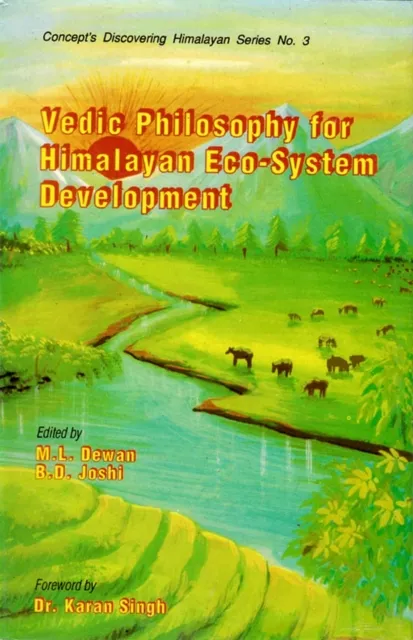
Images of Women in the Folk Songs of Garhwal Himalayas: A Participatory Research (Concept's Discovering Himalayas Series No. 6)

Leela's Song and Cultural Expression
Leela sings while cutting grass on the hill-side. Her voice reverberates in akasha, unifying her song with all the elements. She expresses her lived experience to a friend nearby, who responds to her song with a few lines. This creative dialogue is the song of individual experience, of participation. It brings richness and meaning to the lives of the women of Garhwal Himalayas.
Significance of Lived Experience and Empathy
This book reiterates the significance of looking at the lived experience of communities with the notion of empathy, participation and wholeness. Wholeness means that all parts belong together, that they partake in each other. Understanding culture is more than what the words imply. It involves an in-dwelling, listening to the ''hum'' behind the spoken word.
Perception and Methodology
Songs are to be understood as a matter of actual experience, of participation and of keen observation. All this means that a new form of perception, a different spiral of understanding other than that of ''objectivity'' is required. This approach is radically different from the normal ''linear'' methodologies of social science research which tend to fragment disciplines and treat human beings as ''passive objects''.
The way the songs have been looked at in this book provides very significant answers in terms of the new directions which need to be taken into account wherever human communities are involved. The validity of this approach is especially relevant for India because here cultural traditions are largely transmitted by oral means. This is the core-methodology of this book and one of its major contributions in order to set up clear guidelines for an alternate paradigm in anthropological field research.