£3.99
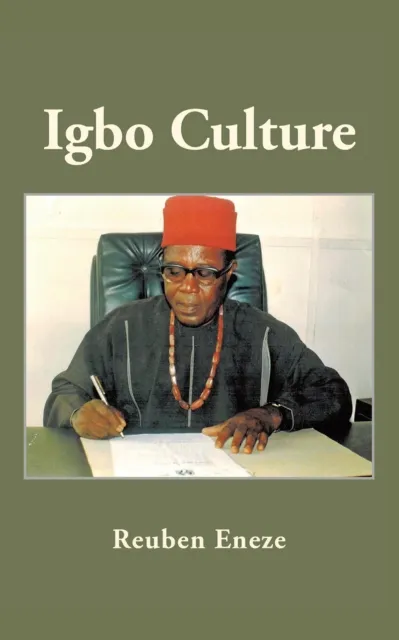
Igbo Culture

Introduction
The author presented his book Igbo Culture in a most convincing way by quoting expert opinions on most of the issues he discussed in the book. Through his carefully researched work and detailed analysis of facts, he showed that Igbo youths working hard like their ancestors can reform Igboland into a new and better civilization by sifting the good aspects of Igbo culture into today’s way of life.
Migration and Development
He started his book by making a brief reference to the possible migration route of Igbo ancestors from their earliest settlements in the forest region of Central Africa to their present-day settlement in Southeastern Nigeria of West Africa. He also made a brief reference to the development of the Igbo civilization through the period covering the Stone Age and Iron Age civilizations (pages 114).
Cultural Background
He painted a clear picture of the cultural background of the community where he was born and brought up and lived in for more than sixty years before he traveled to the United States of America. He traced the more than twenty-six generations-deep lineages, beliefs, concepts, customs, and history of Ihe Shikeaguma in Ntuegbe clan of Enugu State in Southeastern Nigeria as a sample core Igbo culture community. He also delved into the historical links and social formation of this community, with emphasis on genealogy, religion, settlement, language, government, law enforcement, defense, seasons, festivals, and residential structures (pages 1583).
Igbo Thought and Cultural Products
He took his readers to Igbo thought on God, self, family, human life, birth, death, spirit, human mind, and reincarnation (pages 85113). He clearly documented the cultural products of Igbo thought, which can be seen in the formulation of Igbo institutions with special reference to marriage, the extended family system, the social status structure and title system, festivals, informal education, traditional law, community service, religion, divination, and health-care services (pages 114202).
Symbols and Instruments of Igbo Thought
He explained that the symbolism of various articles and some spoken words in Igbo culture are products of Igbo thought. He referred to ofo stick, kola nut, alligator pepper, spears, tribal face marks, body paint, white chalk, and the young palm frond as symbols or instruments of Igbo philosophical expressions and concepts (pages 203214).
Influences on Igbo Culture
He showed how Igbo culture and philosophy have been affected by the cultures of Igbo neighbors in Nigeria and by other foreign cultures with special references to the following:
- Ugwuele civilization (a Stone Age culture) 1,000,000 BC - 500,000 BC
- Nri civilization (a ritualized kingship system) AD 800 - AD 1700
- Aro civilization (slave trade and colonial era) AD 1700 - AD 1850
- Border civilization (slave trade and colonial era) AD 800 - AD 1900
- External civilization (slave trade and colonial era) AD 1700 - AD 2000
Conclusion and Evaluation
The author concluded his work by making an evaluation of Igbo culture. He carefully examined the oriented values of the Igbo and highlighted those areas of Igbo culture that should be refurbished and reinfused into Igbo life by the Igbo themselves in order to transform Igboland into a big theater of modern civilization (pages 239-246).