£50.99
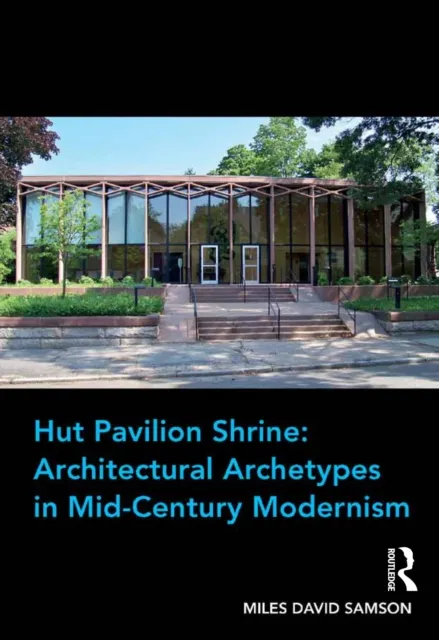
Hut Pavilion Shrine: Architectural Archetypes in Mid-Century Modernism

Introduction to Mid-Century Modernism
The phase of American architectural history we call mid-century modernism, 1940-1980, saw the spread of Modern Movement tenets of functionalism, social service and anonymity into mainstream practice. It also saw the spread of their seeming opposites. Temples, arcades, domes, and other traditional types occur in both modernist and traditionalist forms from the 1950s to the 1970s.
Focus of Hut Pavilion Shrine
Hut Pavilion Shrine examines this crossroads of modernism and the archetypal, and critiques its buildings and theory. The book centers on one particularly important and omnipresent type, the pavilion - a type which was the basis of major work by Louis I. Kahn, Paul Rudolph, Philip Johnson, Minoru Yamasaki, and other eminent architects.
Scope and Connections
While focusing primarily on the architecture culture of the United States, it also includes the work of British, European Team X, and Scandinavian designers and writers. Making connections between formal analysis, historical context, and theory, the book continues lines of inquiry which have been pursued by Neil Levine and Anthony Vidler on representation, and by Sarah Goldhagen and Alice Friedman on modernism’s forbidden elements of the honorific and the visually pleasurable.
Significance of Pavilionizing
It highlights the significance of pavilionizing mid-century designers such as Victor Lundy, John Johansen, Eero Saarinen, and Edward Durell Stone, and shows how frequently essentialist and traditionalist types appeared in the roadside vernacular of drive-in restaurants, gas stations, furniture and car showrooms, branch banks, and motels.
Legacy and Influence
The book ties together the threads in mid-century architectural theory that addressed aspects of type, essential structure, and primal humanistic aspects of environment-making and discusses how these concerns outlived the mid-century moment, and in the designs and writings of Aldo Rossi and others they paved the way for Post-Modernism.