£82.99
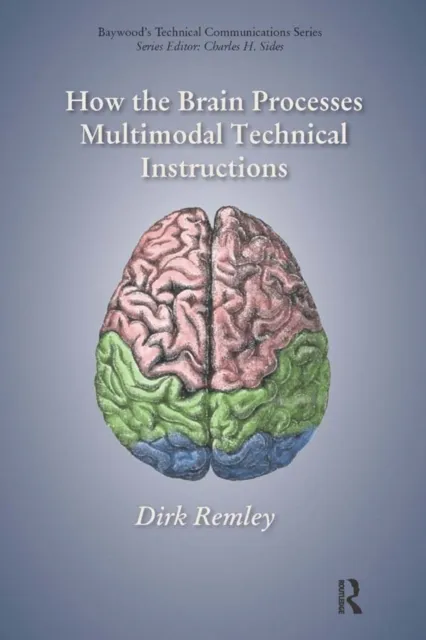
How the Brain Processes Multimodal Technical Instructions

Introduction
While Aristotle acknowledges the connection between rhetoric, biology, and cognitive abilities, scholarship continues to struggle to integrate the fields of rhetoric and neurobiology. Drawing on recent work in neurorhetoric, this book offers a model that integrates multimodal rhetorical theory and multisensory neural processing theory pertaining to cognition and learning.
Using existing theories from multimodal rhetoric and specific findings from neurobiological studies, the author develops a model that integrates concepts from both fields, bridging, if not uniting, them. He also discusses possible applications of the new model, with specific case studies related to training and instruction.
Applications and Media
These applications include various media used in instructional and training contexts, such as print, slide shows, videos, simulations, and hands-on training. The book thus introduces concepts of cognitive neuroscience to multimodal rhetorical theory and facilitates theorization combining multimodal rhetoric and multisensory cognition, and serves as a vehicle by which readers can better understand the links between multimodal rhetoric and cognitive neuroscience associated with technical communication.
Industry and Practice
Integrating case studies from industry and practice, the text makes explicit connections between academic scholarship and workplace preparation. It also describes how interdisciplinary research can contribute to pharmaceutical research, as well as the development of productive instructional materials.
Theoretical Implications
Rhetoric is affected by how the brain of any member of a given audience can process information. This book can promote further research—qualitative and quantitative—to develop a better understanding of the relationship between multimodal messages and how the brain processes such information.