£40.00
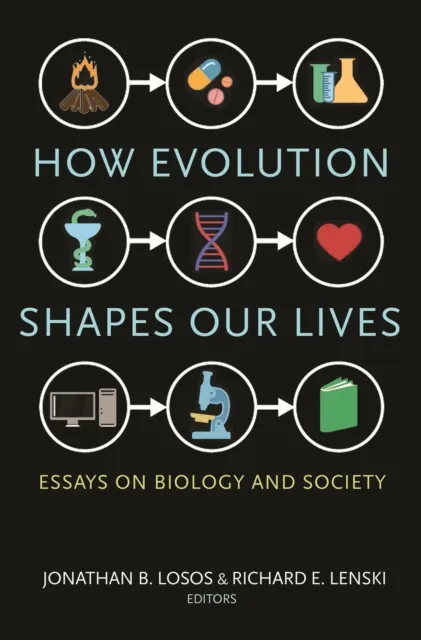
How Evolution Shapes Our Lives
Essays on Biology and Society

An authoritative exploration of why understanding evolution is crucial to human life today
It is easy to think of evolution as something that happened long ago, or that occurs only in "nature," or that is so slow that its ongoing impact is virtually nonexistent when viewed from the perspective of a single human lifetime. But we now know that when natural selection is strong, evolutionary change can be very rapid. In this book, some of the world's leading scientists explore the implications of this reality for human life and society. With some twenty-three essays, this volume provides authoritative yet accessible explorations of why understanding evolution is crucial to human life—from dealing with climate change and ensuring our food supply, health, and economic survival to developing a richer and more accurate comprehension of society, culture, and even what it means to be human itself. Combining new essays with essays revised and updated from the acclaimed Princeton Guide to Evolution, this collection addresses the role of evolution in aging, cognition, cooperation, religion, the media, engineering, computer science, and many other areas. The result is a compelling and important book about how evolution matters to humans today.
The contributors are Dan I. Andersson, Francisco J. Ayala, Amy Cavanaugh, Cameron R. Currie, Dieter Ebert, Andrew D. Ellington, Elizabeth Hannon, John Hawks, Paul Keim, Richard E. Lenski, Tim Lewens, Jonathan B. Losos, Virpi Lummaa, Jacob A. Moorad, Craig Moritz, Martha M. Muñoz, Mark Pagel, Talima Pearson, Robert T. Pennock, Daniel E. L. Promislow, Erik M. Quandt, David C. Queller, Robert C. Richardson, Eugenie C. Scott, H. Bradley Shaffer, Joan E. Strassmann, Alan R. Templeton, Paul E. Turner, and Carl Zimmer.