£129.50
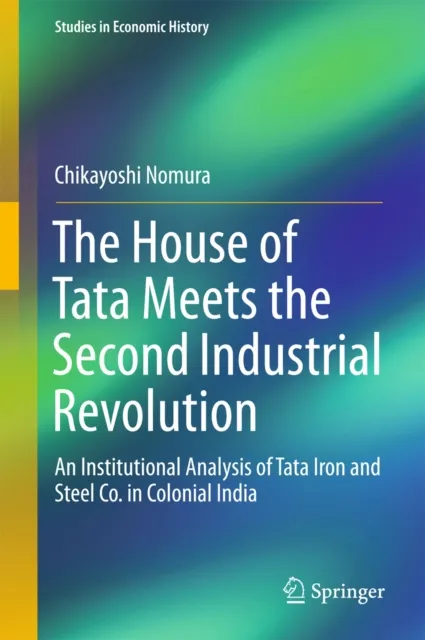
House of Tata Meets the Second Industrial Revolution
An Institutional Analysis of Tata Iron and Steel Co. in Colonial India

Introduction
This monograph aims to analyze the economic and business history of colonial India from a corporate perspective by clarifying the historical role of institutional developments based on archival evidence of a representative enterprise. The perspective is distinctively unique in that it highlights the salience of corporate-level institutional responses to explain the causes of colonial India’s industrial growth, in addition to two renowned perspectives focusing on government economic policy or factor endowment.
Historical Context and Focus
One of the driving forces of India’s high growth rate since the 1980s is the expansion of modern business corporations whose origins date back to the colonial era in the mid-nineteenth century. This monograph explores the historical foundation of the growth of such corporations in colonial India, guided by a substantial collection of documents of Tata Iron and Steel Company, whose rich records have not received the due attention they have long deserved. As clarified by numerous economic and business historians of leading industrialized countries since the works of Douglass North and Alfred Chandler, this study as well proposes that the development of modern business corporations in colonial India was broadly supported by the reciprocal evolution of economic institutions and corporate organizations. Adding a new perspective to the business and economic history of colonial India, the analysis also provides an important case study of the development of corporate business in the non-Western world to the study of global business history.