£109.50
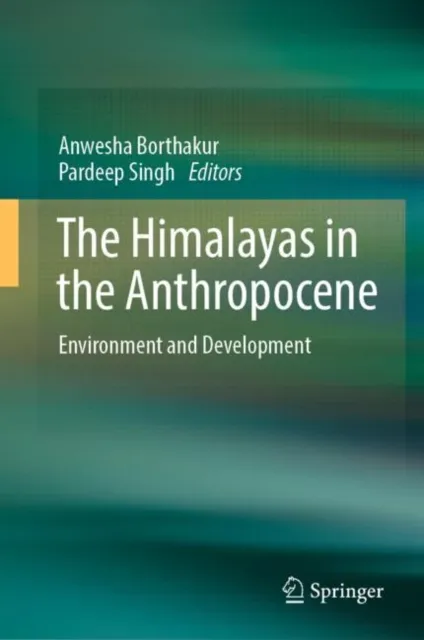
Himalayas in the Anthropocene
Environment and Development

Overview of Biodiversity and Environmental Challenges
This book aims to provide a comprehensive overview of the current challenges in one of the most biodiverse regions in the world. Environmental sustainability and climate change implications in the mountain ecosystems in general and mountainous regions of the Global South in particular are key concerns of the present-day world.
In particular, the mountainous regions in the Global South are excessively being subjected to haphazard developmental activities making them vulnerable to all possible aspects of climate change. Ecologically fragile and biodiversity-rich (considered ‘hotspot’ of biodiversity) Himalayan Region (HR) is subjected to high vulnerability due to climate change and unsustainable developmental activities.
A major portion of the Indian HR, for instance, has gradually been endangered by intense environmental burden owing to rapid and haphazard urbanization, extreme weather events, etc. Unfortunately, environmental sustainability studies in many parts of the region are still inadequate.
Focus of the Book
Accordingly, in this book, the authors provide a detailed account of the Himalayas in the epoch of Anthropocene—“the most recent period in Earth’s history when human activity started to have a significant impact on the planet’s climate and ecosystems" (as defined by the National Geographic Society).
It is no secret that the haphazard developmental activities in the Himalayas are having tremendous impacts on the local ecosystems. Many of such impacts are irreversible over the next hundreds of years and it should ring an alarm to all of us alike.
Therefore, it becomes increasingly imperative that we document the existing anthropogenic challenges in the Himalayas, analyse them and find a way where environment and development can go hand in hand. This book is an attempt in that direction.
The authors aim to address issues ranging from unorganized tourism practices to the big dams in the Himalayas and from mining and quarrying activities to climate change implications and sustainable development goals (SDGs).