£299.99
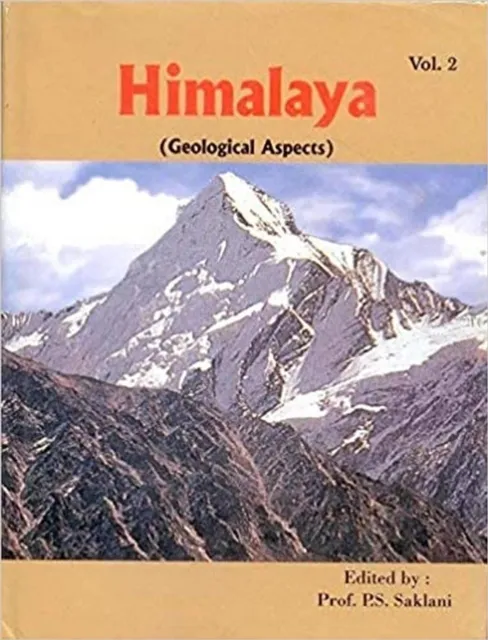
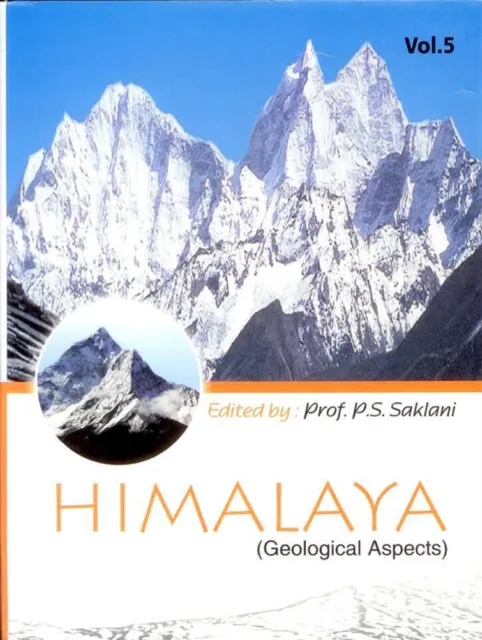
Himalaya (Geological Aspects)

Introduction
The volume consists of modern researches on the Himalayan Mountain Geology by eminent and active geoscientists of India and abroad.
Formation and Tectonics
The formation of the Himalaya is a result of collision tectonics and the rock-material from the deep interior was exhumed for about 40 km and was horizontally transported for about 200 km along the Main Central Thrust.
Historical Development
Historically the development of Himalayan geology was adversely affected due to World War I and II but notable contributions were made when India became independent.
Geological Layers and Faults
Two layers of Siwalik sediments underlie the alluvium: the upper Siwalik-1000m and lower Siwalik-4000m. Geophysically, it was determined that some of the faults of the Himalaya are deep rooted (12 km).
Rock Types and Deformations
Palaeogene rocks are regressive and were derived from the Indus Suture Zone. Granitoids of Kinnaur show mineralogical variations. Alkali-silica reaction in rocks plays a significant role in the rock-strength property. Rocks of the Yamuma valley were subjected to ductile and brittle-ductile deformation.
Geomorphological Features and Structural Patterns
Dynamic rejuvenation due to vertical uplift is observed in geomorphological features. The composite Main Central Thrust consisting of MCT-I, II and III occurs in the form of a major Duplex characterized by shortening (60%) and ramping (8 km). The rocks of the Almora Nappe were affected by pre-syn-and post-shear zones. The Mussoorie syndine consists of pop-up klippen. Imbricated slices are associated with the thrusts.
Metamorphism and Deformation
The Himalayan rocks were metamorphosed in two distinct phases which were progressive and retrogressive and were related with three phases of deformation. Many geomorphological features in the Himalayan region are marked by neotectonics.
Structural Architecture and Movements
Geokinematics and structural patterns of the whole Himalayan/Alpine belt indicate that their structural architecture was made by compressional, rotational and strike slip movements.
Conclusion
It is hoped that the volume would be useful to researchers, academicians and geoscientists in governmental and nongovernmental organisations of the country and abroad.