£9.99
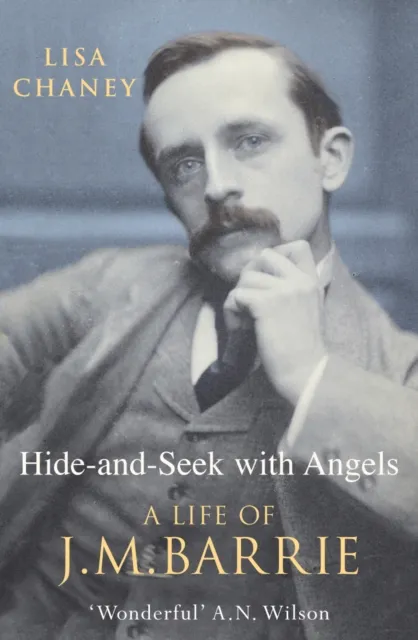
Hide-And-Seek With Angels
The Life of J.M. Barrie

When James Matthew Barrie died, in 1937, his funeral was an occasion for national mourning. Crowds gathered; reporters and newsreel men came to record the day, and many well-known figures followed the coffin to its resting place in the little churchyard up on the hill. In London, a month later at St Paul''s Cathedral a memorial service was held for the Scottish weaver''s son who died Britain''s playwright extraordinaire.
A succession of novels and long-running plays had brought Barrie enormous wealth, critical acclaim, an hereditary Baronetcy and the Order of Merit. His public following extended to Hollywood where his work was performed by the stars of the silver screen. Unhappily such achievements did little to ameliorate the strains in Barrie''s private life. Hampered by a stigmatising divorce, he was also struck by a series of tragic bereavements from which he never fully recovered. At the same time as savouring his public image, Barrie gave no more than a handful of interviews. During his lifetime this inscrutable, enigmatic man succeeded in his desire to remain only partially known.
Barrie was already famous for sophisticated political satires and social comedies when, with the creation of Peter Pan, his immense artistic gift was displayed at its extraordinary best. In the play, where ''All children except one grow up'', Barrie had touched on a universal nerve, the problem of growing up. With Peter Pan he created one of the greatest twentieth-century myths and a work of art quite unlike anything that had gone before. It became a part of the common culture of the Western world, and is as relevant today as on that first performance one hundred years ago.