£38.99
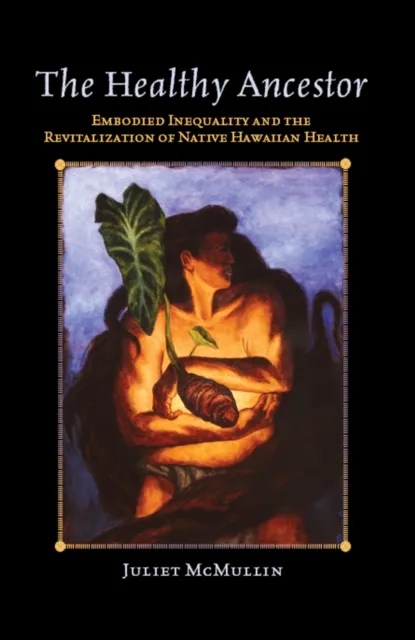
Healthy Ancestor
Embodied Inequality and the Revitalization of Native Hawai’ian Health

Native Americans and Health Disparities
Researchers increasingly worry that Native Americans are disproportionately victims of epidemics and poor health because they fail to seek medical care, are non-compliant patients, or lack immunity enjoyed by the mainstream population.
Challenging the Dominant Approach
Challenging this dominant approach to indigenous health, Juliet McMullin shows how it masks more fundamental inequalities that become literally embodied in Native Americans, shifting blame from unequal social relations to biology, individual behavior, and cultural or personal deficiencies.
Traditional Practices and Revitalization
Weaving a complex story of Native Hawai’ian health in its historical, political, and cultural context, she shows how traditional practices that integrated relationships of caring for the land, the body, and the ancestors are being revitalized both on the islands and in the indigenous diaspora.
Implications for Various Fields
For the fields of medical anthropology, public health, nursing, epidemiology, and indigenous studies, McMullin’s important book offers models for more effective and culturally appropriate approaches to building healthy communities.