£44.99
£52.99
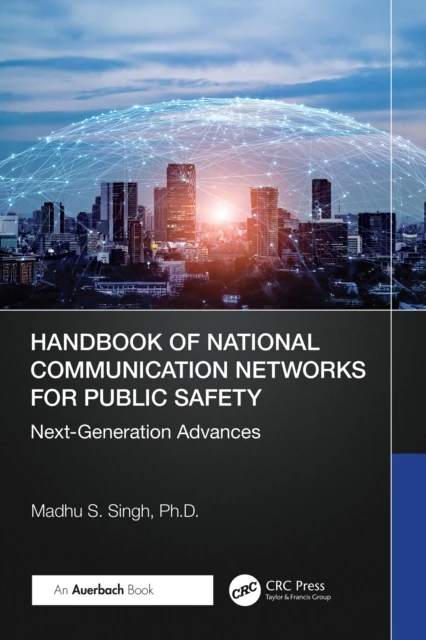
Handbook of National Communication Networks for Public Safety Next-Generation Advances
Next-Generation Advances

Overview
The U.S. Department of Homeland Security created the FirstNet Authority for the purpose of building and operating a nationwide public safety broadband network. Handbook of National Communication Networks for Public Safety: Next-Generation Advances traces the evolution of the National Public Safety Broadband Network (NPSBN).
Contents
The book is composed of three major sections, each section containing specific contents: Advent of FirstNet, National Public Safety Broadband Network, and Evolution of National Public Safety Broadband Network (NPSBN). It also covers Future Innovations, Opportunities, and Challenges in Public Safety.
Coverage
The book covers planning, architecting/designing of networks and services, deployment, and operations, as well as enhancements to cover all states and territories of the United States. Other highlights include:
- 4G/ 5G/ 6G mobile broadband technology
- The FirstNet and NPSBN ecosystem
- The dedicated and secure public safety network for first responders
- Terrestrial and satellite-based broadband network and services for public safety
- 911 and location-based services
- Quality of service
- Cybersecurity
- AI/AR opportunities, network interoperability, and challenges
Technical Details
The book features technical details of the NPSBN and services. It explains how enhanced devices make the NPSBN accessible anywhere and anytime to public safety personnel over dedicated and secure LTE/5G networks. It discusses how public safety challenges differ from urban to rural areas, from mainland to U.S. territories, and from land to sea coverage. The book concludes with an analysis on future challenges and presents approaches for successful resolution of these issues.