£159.50
Groundwater Resource Management Planning Strategies
A Geospatial Approach: Volume 1

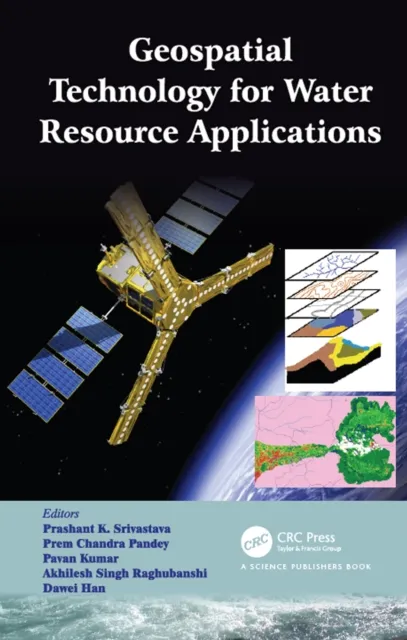
Geospatial tools to Groundwater Resources
Explain the most recent methods in Geographic Information Systems (GIS) and geostatistics as they apply to groundwater through complete case studies that demonstrate actual remote sensing applications in this field. Due to the rising demand for water, its decreasing quality, and its limited supply, water resource management has grown to be a serious issue. In many places of the world, groundwater is the main supply of fresh water, but certain areas are growing unduly reliant on it, utilising groundwater more quickly than it can be replenished naturally and resulting in an unceasing decrease in water tables. For the efficient use, management, and modelling of this priceless but diminishing natural resource, systematic planning of groundwater consumption using current approaches is crucial. Remote sensing, GIS, GPS (Global Positioning Systems), and geostatistical approaches are among the effective water management methods that have developed with the introduction of powerful and fast personal computers.
Environmental and Health Relationships
Now more than ever, it is possible to analyse with greater accuracy the relationships between environmental elements and human health and wellbeing. Our understanding of the continuum between environment and health consequences on many different sizes, from the global to even the individual, has evolved thanks to a number of transdisciplinary accomplishments.
Scope of the Book
This book covers a wide range of geospatial health-related topics and methods, including climate change, healthcare utilisation, health disparities, air quality assessment, asthma, water quality assessment, and machine learning. It also advances scientific understanding, development, and application of geospatial technologies related to water resource management.
Target Audience
Researchers and postgraduate students in Earth and Environmental Sciences, particularly GIS, agriculture, hydrology, natural resources, and soil science, who need to be able to apply the most recent innovations in groundwater research in a practical way will find Case Studies in Geospatial Applications to Groundwater Resources to be a valuable resource. This edited volume will concentrate on the most recent studies and uses of geospatial methods in water resource management, offering insights into the difficulties and possibilities of applying these methods to solve practical issues.