£129.50
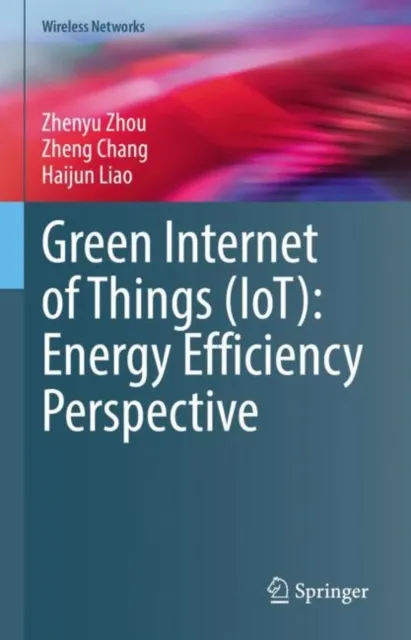
Green Internet of Things (IoT): Energy Efficiency Perspective

Energy Efficiency Issues in Green IoT
Energy efficiency issues for green internet of things (IoT) are investigated in this book, from the perspectives of device-to-device (D2D) communications, machine-to-machine (M2M) communications, and air-ground networks. Specifically, critical green IoT techniques from D2D communications in the cellular network to M2M communications in industrial IoT (IIoT), (from single physical-layer optimization to cross-layer optimization, and from single-layer ground networks to stereoscopic air-ground networks) are discussed in both theoretical problem formulation and simulation result analysis in this book.
Overview of IoT and Challenges
Internet of Things (IoT) offers a platform that enables sensors and devices to connect seamlessly in an intelligent environment, thus providing intelligence services including monitoring systems, industrial automation, and ultimately smart cities. However, the huge potentials of IoT are constrained by high energy consumption, limited battery capacity, and the slow progress of battery technology. The high energy consumption of IoT device causes communication interruption, information loss, and short network lifetime. Moreover, once deployed, the batteries inside IoT devices cannot be replaced in time. Therefore, energy efficient resource allocation is urgent to be investigated to improve the energy efficiency of IoT, facilitate green IoT, and extend the network lifetime.
Book Content and Audience
This book provides readers with a comprehensive overview of the state-of-the-art key technologies, frameworks, related optimization algorithms, and corresponding integrated designs on green IoT. It also presents an easy-to-understand style in a professional manner, making the book suitable for a wider range of readers from students to professionals interested in the green IoT.