£79.99
Globalization and Artisans

Introduction to Globalization and Artisan Communities
The technological advancement and liberalization brought about by Globalization lead to the integration of economic, political, and cultural systems across the globe. Globalization encompasses five ways of flow namely Ethnoscapes, Technoscapes, Financescapes, Mediascapes, and Ideoscapes. Thus, globalization is a unique process which not only offers new opportunities to humankind but also brings many challenges.
In the Indian context, prior to globalization, every artisan community had a different tradition, need, and capacity. These artisan communities were linked to consumer communities of the locale and had domestic markets with local demand for products. According to the United Nations, in the advent of globalization in India, over the past 30 years, the number of Indian artisans has decreased by 30%, indicating the need to re-invest in artisans to safeguard history, culture, and an important source of livelihood.
Harnessing the potential of the artisan sector to preserve traditional craft, strengthen the sector, and improve the incomes of artisans requires different types of investments that should focus and build the cornerstone for artisans’ sustainability. This book is a contemporary attempt to review the scholarly literature on the status, position, cultural economics, green economics, and ethnic production of artisans in general and Telangana artisans in particular.
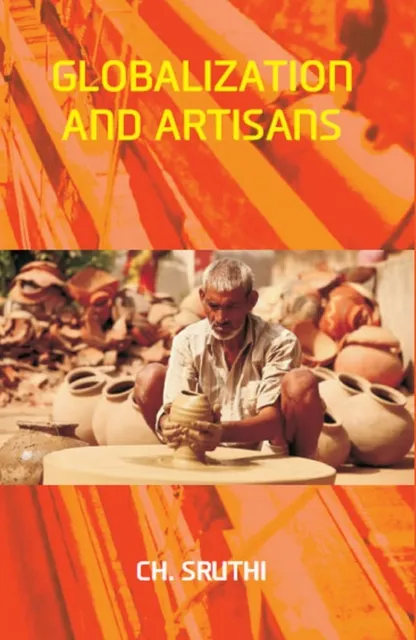
In this globalized era (since 1991), a meaningful analysis of the artisan sector requires focusing on particular geographies and crafts. This book aims to provide a comprehensive understanding of the current status of the artisan sector in Telangana, especially regarding weavers, potters, and blacksmiths. It is also essential to understand the artisan value chain, which depends on human resources, legal entities, credit facilities, technology, transportation to markets, quality checks, and marketing and promotion of goods.
Globalization has changed the need for localized activities, and the demand for products has also evolved. This book explores the changing caste professions in relation to artisans in the specified locale, especially for pottery (skilled), weaving (skilled), and blacksmithing (unskilled) in the context of globalization.