£41.99
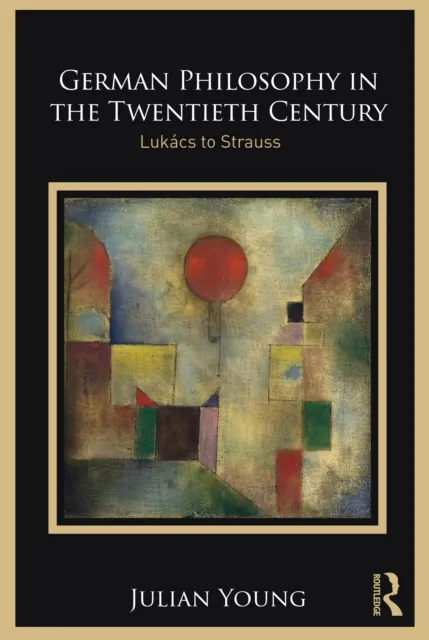
German Philosophy in the Twentieth Century
Lukács to Strauss

The course of German philosophy in the twentieth century is one of the most exciting and controversial in the history of human thought. In this outstanding and engaging introduction, a companion volume to his German Philosophy in the Twentieth Century: Weber to Heidegger, Julian Young examines and assesses the way in which some of the major German thinkers of the period reacted, often in starkly contrasting ways, to the challenges posed by the nature of modernity, the failure of liberalism and the concept of decline.
Divided into two parts exploring major intellectual figures of the left and right respectively, Young introduces and assesses the thought of the following figures:
Georg Lukács
the critique of capitalism: alienation, reification, and false consciousness
Ernst Bloch
the Marxist utopia
Walter Benjamin
the confluence of phenomenology and left-wing thought: the Arcades Project, aura, and the technological reproduction of the artwork
Oswald Spengler
the pessimistic right and the concept of Western decline
Max Scheler
Catholic conservatism and the ‘objective hierarchy of values’
Carl Schmitt
the failure of liberalism, dictatorship, ‘friends’ versus ‘enemies’
Leo Strauss
the rejection of moral relativism and the return to classical philosophy.
Highly relevant when the viability of liberal democracy is again called into question, German Philosophy in the Twentieth Century: Lukacs to Strauss is essential reading for students of German philosophy, phenomenology and critical theory, and will also be of interest to students in related fields such as literature, religious studies, and political theory.