£159.50
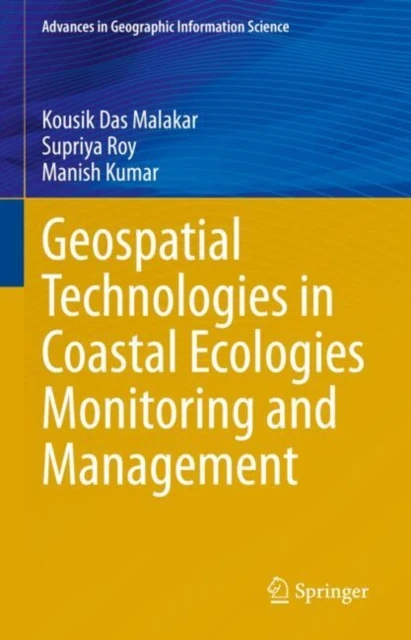
Geospatial Technologies in Coastal Ecologies Monitoring and Management

Introduction
This book contributes to the advancement of scientific knowledge by demonstrating how geospatial technologies can support more effective coastal planning and management. These technologies, such as remote sensing, GIS, and GNSS, play a vital role in monitoring coastal ecosystems and offer powerful tools for data collection, analysis, visualization, and decision-making. They enhance the understanding of coastal needs and enable more informed and sustainable management strategies.
Target Audience
Intended for scientists, professionals, researchers, planners, students, and the general public, the book promotes a deeper understanding of how geospatial tools address contemporary coastal challenges. It also emphasizes inclusive decision-making and supports the development of strategies for sustainable socio-ecological coastal systems.
Book Structure
The book is structured into six parts. Part One introduces the fundamentals of remote sensing, including sensor networks, satellite systems, aerial imaging, photogrammetry, and air photo interpretation. Part Two covers key GIS concepts, data analysis, database management, digital image processing, and participatory GIS. Part Three explores GNSS and GPS techniques. Part Four discusses the application of geospatial tools in coastal ecological monitoring and management. Part Five presents real-world case studies and field narratives that explore a range of topics, including climatic trend analysis, shoreline dynamics modelling, mangrove canopy health, coastal land use and land cover changes, land surface temperature variations, ecological transformations, mangrove-human conflicts, climate adaptation strategies, the management of climate gaps, spatial considerations in coastal zone management, and the role of climate communication in shaping coastal narratives. And finally, Part Six examines the evolving nature of coastal research, highlighting the role of GIScience in transdisciplinary approaches and strategic decision-making.