£32.98
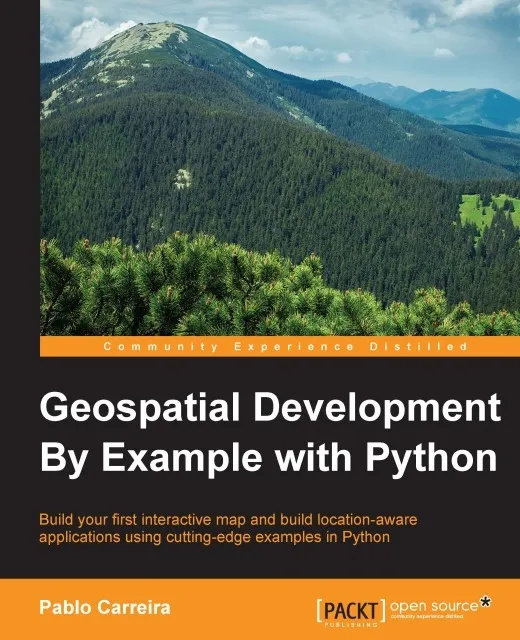
Geospatial Development By Example with Python

Build your first interactive map and build location-aware applications using cutting-edge examples in Python
About This Book
Learn the full geo-processing workflow using Python with open source packages
Create press-quality styled maps and data visualization with high-level and reusable code
Process massive datasets efficiently using parallel processing
Who This Book Is For
Geospatial Development By Example with Python is intended for beginners or advanced developers in Python who want to work with geographic data. The book is suitable for professional developers who are new to geospatial development, for hobbyists, or for data scientists who want to move into some simple development.
What You Will Learn
Prepare a development environment with all the tools needed for geo-processing with Python
Import point data and structure an application using Python's resources
Combine point data from multiple sources, creating intuitive and functional representations of geographic objects
Filter data by coordinates or attributes easily using pure Python
Make press-quality and replicable maps from any data
Download, transform, and use remote sensing data in your maps
Make calculations to extract information from raster data and show the results on beautiful maps
Handle massive amounts of data with advanced processing techniques
Process huge satellite images in an efficient way
Optimize geo-processing times with parallel processing
In Detail
From Python programming good practices to the advanced use of analysis packages, this book teaches you how to write applications that will perform complex geoprocessing tasks that can be replicated and reused.
Much more than simple scripts, you will write functions to import data, create Python classes that represent your features, and learn how to combine and filter them.
With pluggable mechanisms, you will learn how to visualize data and the results of analysis in beautiful maps that can be batch-generated and embedded into documents or web pages.
Finally, you will learn how to consume and process an enormous amount of data very efficiently by using advanced tools and modern computers' parallel processing capabilities.
Style and approach
This easy-to-follow book is filled with hands-on examples that illustrate the construction of three sample applications of how to write reusable and interconnected Python code for geo-processing.