£109.50
Geological Storage of CO2 in Deep Saline Formations

Overview of Saline Aquifer Characterization and Storage
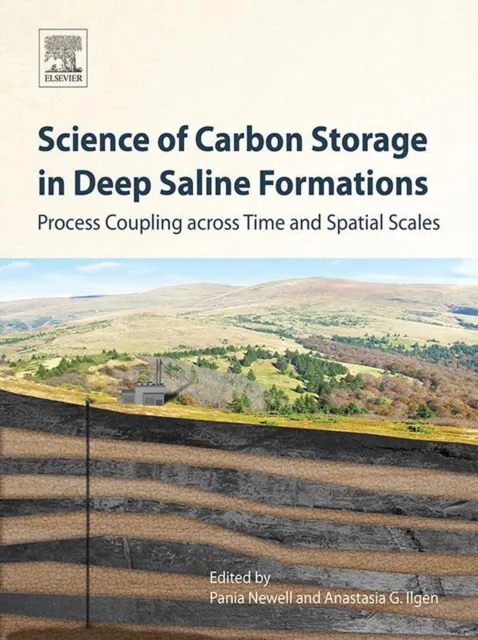
This book offers readers a comprehensive overview, and an in-depth understanding, of suitable methods for quantifying and characterizing saline aquifers for the geological storage of CO2. It begins with a general overview of the methodology and the processes that take place when CO2 is injected and stored in deep saline-water-containing formations. It subsequently presents mathematical and numerical models used for predicting the consequences of CO2 injection.
Experimental Methods and Field Projects
This book provides descriptions of relevant experimental methods, from laboratory experiments to field scale site characterization and techniques for monitoring spreading of the injected CO2 within the formation. Experiences from a number of important field injection projects are reviewed, as are those from CO2 natural analog sites. Lastly, the book presents relevant risk management methods.
Importance of Geological Storage of CO2
Geological storage of CO2 is widely considered to be a key technology capable of substantially reducing the amount of CO2 released into the atmosphere, thereby reducing the negative impacts of such releases on the global climate. Around the world, projects are already in full swing, while others are now being initiated and executed to demonstrate the technology.
Deep Saline Formations and Challenges
Deep saline formations are the geological formations considered to hold the highest storage potential, due to their abundance worldwide. To date, however, these formations have been relatively poorly characterized, due to their low economic value. Accordingly, the processes involved in injecting and storing CO2 in such formations still need to be better quantified and methods for characterizing, modeling and monitoring this type of CO2 storage in such formations must be rapidly developed and refined.