£139.50
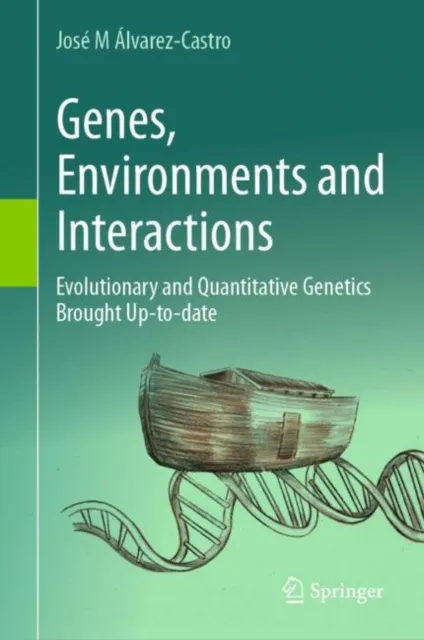
Genes, Environments and Interactions
Evolutionary and Quantitative Genetics Brought Up-to-date

Genetic effects are the core concepts from which quantitative genetics and the evolutionary synthesis emerged. The groundbreaking theory of genetic effects was first proposed over a century ago. This book revises that theory, both conceptually and mathematically, and brings it up-to-date.
Key Features
- The theory here compiled is supplemented with non-previously-published developments covering the broadest spectrum of simultaneously multiallelic and multilocus architectures with autosomal and sex-linked loci
- Arbitrary interactions (dominance, gene-gene, gene-environment, gene-sex, and parent-of-origin interactions) are accounted for
- Both effects of allele substitutions from the reference of individual genotypes and in the context of populations are worked out
- Populations are considered regardless of any departures from equilibrium frequencies (including both departures from Hardy-Weinberg, departures from linkage equilibrium, and non-random associations between/among genes and environments)
- All developments are derived under the same mathematical framework, so that transformations of genetic effects between different contexts are easily allowed
In brief, this book enables novel applications to current empirical paradigms (like gene-mapping and genomic prediction) while adhering to the classical conceptualization of genetic effects and variance decomposition that let quantitative genetics and the evolutionary synthesis flourish.
All relevant concepts are carefully clarified and discussed from a historical perspective. The theoretical developments presented in the book are illustrated by built-in cases and applications with real data. Reassuringly, the adequacy of the theory here presented is corroborated based on the fundamentals of model development.