£115.00
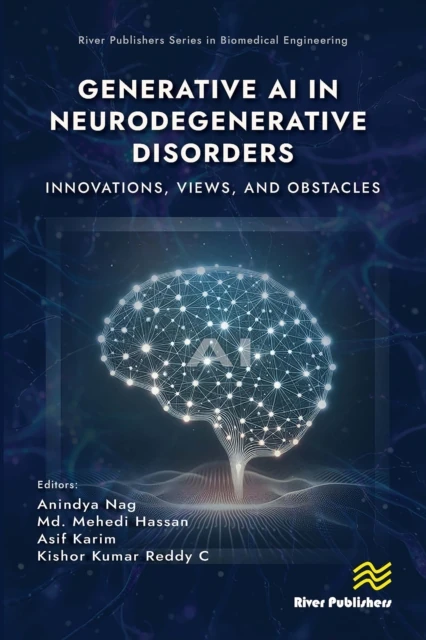
Generative AI in Neurodegenerative Disorders
Innovations, Views, and Obstacles

Overview
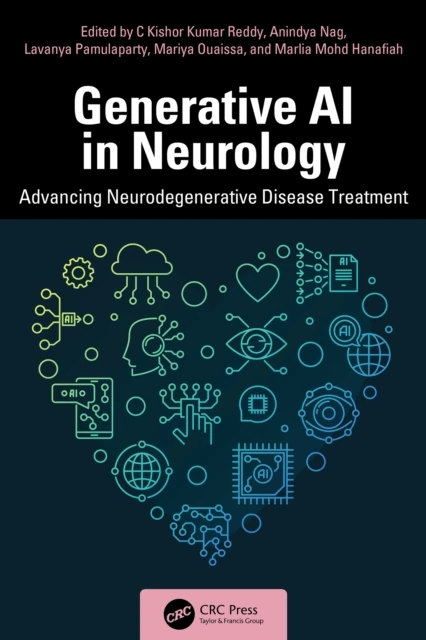
This book delves into the transformative power of AI in the realm of neurodegenerative diseases, covering topics such as ALS, Huntington's, Parkinson's, and Alzheimer's. Generative AI provides new opportunities for early diagnosis, precise therapy, and individualized rehabilitation, which are crucial as these conditions remain major obstacles for healthcare providers and researchers.
Target Audience
Researchers, physicians, AI developers, and healthcare professionals will find this book an invaluable resource for understanding how AI is influencing the development of treatments for neurodegenerative diseases. It describes important obstacles and future directions while providing insights into the newest breakthroughs, thus bridging the gap between technology and practical clinical applications.
Technological Developments
Predictive analytics, biomarker identification, and drug discovery are being transformed by AI-driven models, such as deep neural networks, generative adversarial networks (GANs), and variational autoencoders (VAEs). This book offers a comprehensive examination of these developments.
Rehabilitation Tools and Technologies
Robots, wearable sensors, and cognitive therapy platforms are some of the AI-enhanced rehabilitation tools covered, as are AI-integrated cutting-edge technologies like fMRI and MRI, gene-editing methods like CRISPR, and more.
Ethics, Privacy, and Regulatory Issues
In addition to discussing recent technical developments, this book takes a close look at the data privacy, ethics, and regulatory issues that arise when using AI to study neurodegenerative disorders. Issues like algorithmic bias, model explainability, and fair AI-driven healthcare are thoroughly investigated in light of the growing usage of AI models in clinical decision-making, mental health applications, and cognitive rehabilitation.