£64.99
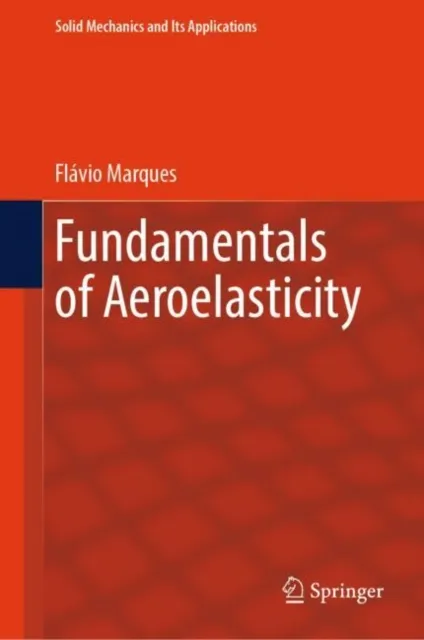
Fundamentals of Aeroelasticity

Introduction
This textbook provides the fundamentals of aeroelasticity, with particular attention to problems of interest to aeronautical engineering. The mathematical methods and tools applicable to the modern modeling of general aeroelastic problems are presented, discussed, and applied to fixed-wing aircraft configurations.
Structure of the Book
It is composed of ten chapters divided into two parts: (I) aeroelastic modeling and analysis and (ii) mathematical tools. The six chapters that compose the first part start from the historical background of the discipline, then present the methods for coupling structural dynamics and unsteady aerodynamics for the aeroelastic modeling of the typical wing section, and then extend them to applications for twisted, tapered, swept finite-wing configurations.
Theoretical Foundations
In this context, particular attention is paid to the presentation, interpretation, and discussion of the available unsteady sectional aerodynamic theories, both in the time and frequency domain, providing a broad scenario of the formulations that can be used for conventional and non-conventional aerodynamic/aeroelastic applications.
Modern Aeroelasticity
For a modern view of aeroelasticity, a significant portion of the textbook deals with illustration and discussion of three-dimensional aerodynamic theories and computational methods for the determination of unsteady aerodynamic loads over lifting bodies in incompressible and compressible flows, as well as to the introduction and explanation of methodologies for the identification of reduced-order, state-space aerodynamic/aeroelastic operators suitable for stability (flutter) analysis and control purposes.
Aeroservoelastic Modeling
A chapter is dedicated to the theories and approaches for aeroservoelastic modeling.
Additional Topics
In the second part of the textbook, additional chapters provide theoretical insights on topics that enrich the multidisciplinary knowledge related to widely applied methods and models for the analysis and solution of aeroelastic problems.
Intended Audience
The book serves as a reference tool for master''s degree students in aeronautical/aerospace engineering, as well as researchers in the field of aeroelasticity.