£89.50
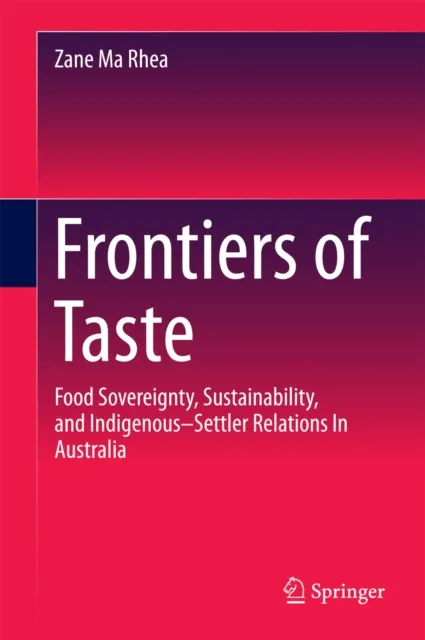
Frontiers of Taste
Food Sovereignty, Sustainability and Indigenous–Settler Relations In Australia

Book Description
This book provides a critical, multiperspective, sociohistorical analysis of the role of food in postcolonial Indigenous, British and French settler relations. Drawing on archival resources from Australian explorers, settlers and nation builders, the book argues that contemporary issues of food security, sovereignty and sustainability have been significantly shaped by the colonial impact on human foodways. The author goes on to enhance readers’ understanding of how contact between inhabitants and newcomers was shaped and informed by food, and how these engagements established a modus vivendi that carries through to the present day.
Research Focus and Findings
Based on the assessment of archival records, it uses a comparative, socio-historical lens to investigate contact between Indigenous and non-Indigenous people where the exchange of food or knowledge about food took place. It finds that the transfer of food and food knowledge was multifaceted, and the flow of food knowledge occurred in both directions, although these exchanges were neither symmetrical nor balanced. It also analyzes and discusses food as a focal point of activity.
Final Chapter and Future Opportunities
The final chapter offers an assessment of the potential for the development of a sustainable, nutritious, tasty Australian cuisine that moves beyond the tropes and stereotypical narratives embedded into colonial Indigenous-settler relations in the context of food. If this was accepted by all Australians, it would allow opportunities to be created for Indigenous Australians to develop food products for the market that are sustainable, economically viable and developed in ways that are culturally appropriate.