£43.61
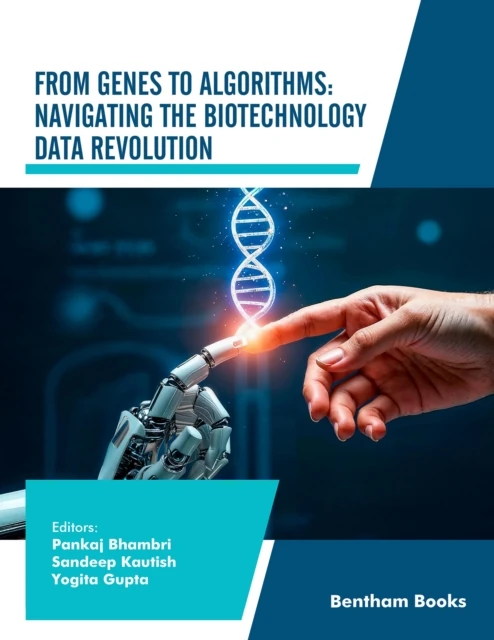
From Genes to Algorithms: Navigating the Biotechnology Data Revolution

Positioned at the crossroads of genomics, proteomics, artificial intelligence, and biomedical engineering, this book provides a roadmap for leveraging computational intelligence to address the complex challenges of modern life sciences, healthcare, and industrial biotechnology.
Across twelve comprehensive chapters, the book lays the foundations for sequencing technologies, omics data, and the principles of biotechnology data management. It then transitions into the application of machine learning models ranging from neural networks to optimization frameworks to extract meaningful insights from large-scale biological datasets. Subsequently it addresses pressing challenges such as data noise, scalability, and ethical AI, while also highlighting algorithmic breakthroughs in pharmacogenomics, drug discovery, precision medicine, and synthetic biology. Case studies illustrate real-world applications, from CRISPR diagnostics and clinical trial optimization to agricultural genomics and biomedical engineering innovations. The closing chapters project the future trajectory of biotechnology, exploring quantum computing, federated learning, and secure data-sharing techniques.
Key Features:
Uncovers the revolutionary role of computational algorithms in biotechnology research and healthcare
Explores the integration of AI, ML, and optimization methods in genomics, proteomics, and systems biology
Analyzes real-world applications through case studies in pharmacogenomics, CRISPR, and agritech
Provides practical insights into implementing secure, scalable, and ethical data solutions
Gives an understanding of future trends such as quantum computing and federated learning in biotech innovation